Solar or battery Christmas lights: do they work in winter?
Solar Christmas lights do work in a British winter, but on a quarter of the summer sunshine. Here is what to expect from solar, battery and plug-in sets outdoors, and how to get more hours from each.
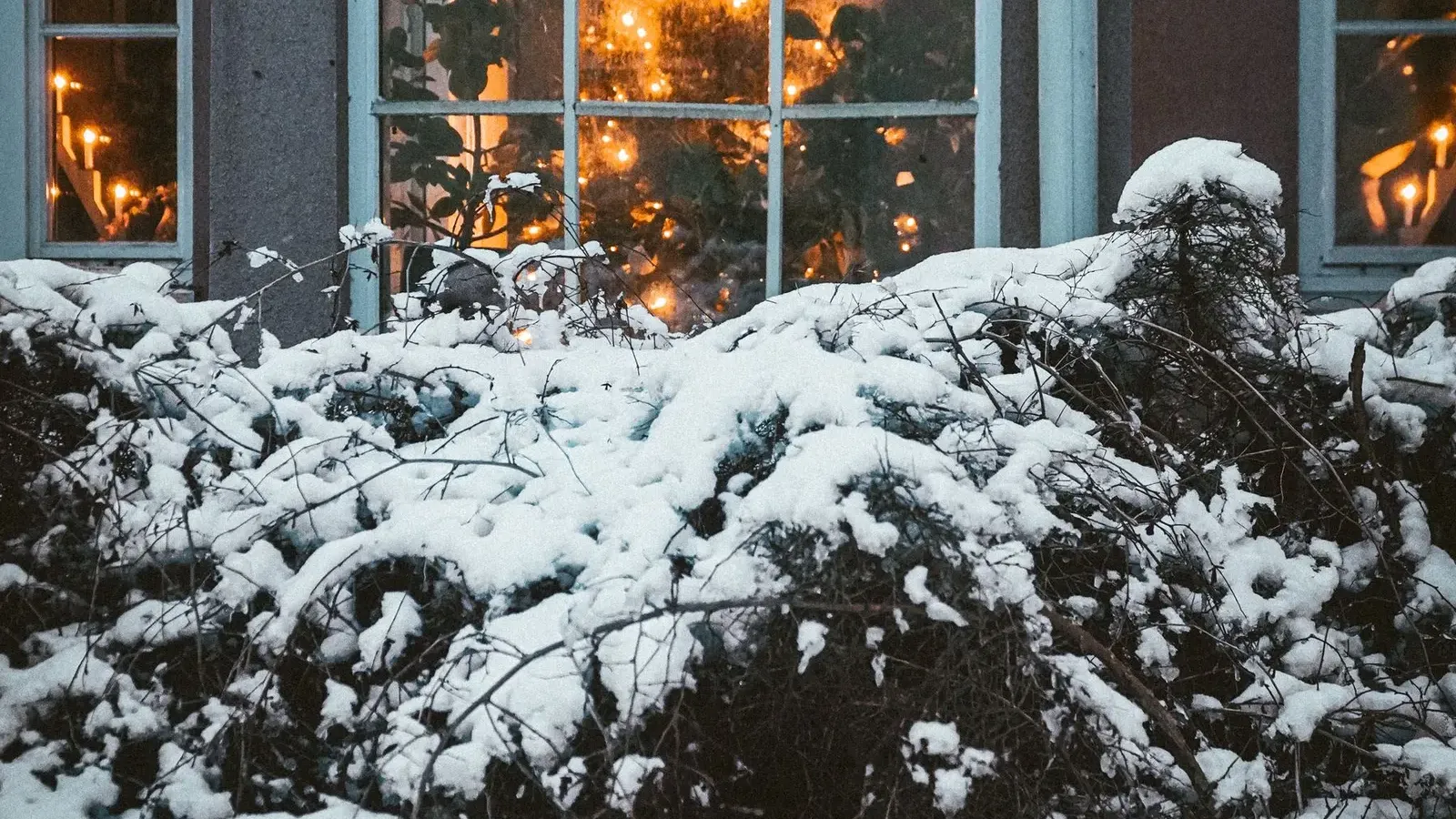
Solar Christmas lights do work outdoors in a UK winter, but on a fraction of the power they get in summer. The Met Office’s 1991 to 2020 averages give the UK 42.7 hours of sunshine in December against 171.5 in June, about a quarter. In Which?’s long-running garden tests, the best solar lights still shone through to the next morning after a short, sunny winter day, while the weakest lasted about an hour after a full day of sun. Battery sets remove the gamble at the cost of batteries, and plug-in sets stay the brightest. Here is how the three compare, and how to get the most from a solar set.
Do solar Christmas lights work in winter?
Yes, with limits. A solar set charges a rechargeable battery from the sun, and Which? says solar lights only charge properly in direct sun. The problem in December is the size of the charge: short days and a low sun that throws long shadows.
| Place | Daylight on 21 December 2026 | Sun height at midday |
|---|---|---|
| London | 7 h 50 min | About 15° |
| Cardiff | 7 h 50 min | About 15° |
| Belfast | 7 h 15 min | About 12° |
| Edinburgh | 6 h 57 min | About 11° |
We calculated these figures with the standard NOAA solar formulas. On 21 June the same places get between 16 h 38 min (London) and 17 h 36 min (Edinburgh) of daylight, with the midday sun 57 to 62 degrees up.
What a winter charge gives you
Run time depends on the panel, the battery and the spot. Which? has kept solar lights in its test garden since 2020: some shone all night after a short, sunny winter day, others managed about an hour after a full day of sun. Maker claims show the same drop, with one light in Which?’s tests rated at 8 to 12 hours in summer and 3 to 10 hours in winter.
- 42.7 haverage UK sunshine in December (Met Office, 1991 to 2020)
- 171.5 hin June, four times as much
- 7 h 50 minof daylight in London on the shortest day
Solar vs battery vs plug-in outdoor Christmas lights
Each power source trades something away. This table sets them side by side for a December display, so you know which type to look for in our Christmas lights collection.
| Point | Solar | Battery (AA) | Plug-in (mains) |
|---|---|---|---|
| Running cost | None | Replacement batteries, set by the battery life quoted on the pack (see below) | Low: Which? found LED chains cheap to run next to other appliances |
| Winter run time | From about an hour to all night, depending on sun and set | Fixed by the timer until the batteries fade | As long as you like |
| Brightness | Lowest, and dims on a weak charge | Steady, falls as the batteries run down | Highest and constant |
| Where it works | A spot with sun for part of the day, no socket needed | Anywhere, including shade | Within reach of an outdoor socket |
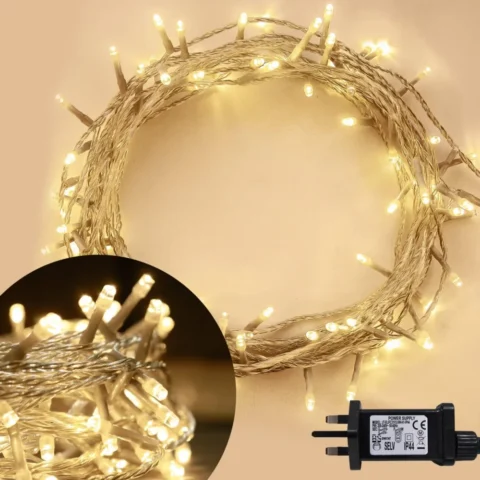
| Main weak spot | Short, dull days | Cost and waste of batteries | Cables, sockets and RCD protection |
For the running cost of plug-in sets in more detail, see our comparison of LED and incandescent Christmas lights.
Battery Christmas lights: how long do the batteries last?
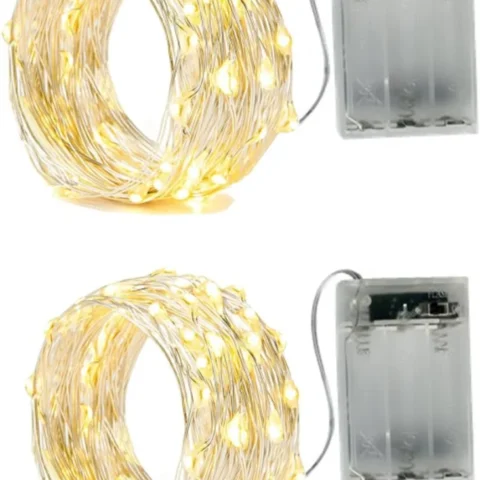
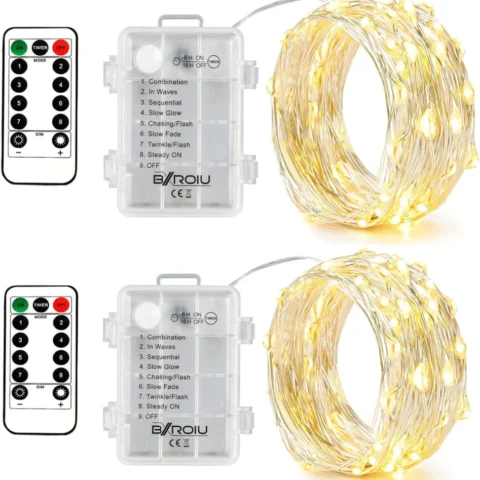
Battery life depends on the number of LEDs, the setting and the batteries. Take the battery life quoted on the pack and divide it by the hours the timer runs each evening: that gives the number of evenings from one set of batteries. A display lit from 1 December to 5 January runs for 36 evenings, so compare that figure with the pack before you buy.
- Use the timer: it keeps the lights to the evening hours you actually see.
- Flashing modes can save power: in Which?’s tests of mains LED chains, the twinkling-flashing setting used 64% less energy than steady on.
- Lights4fun advises rechargeable batteries to cut waste. Check the instructions first: the voltage of the cells sets the brightness, and most standard AA batteries are 1.5 V.
- Choose a battery box made for outdoor use, with an IP rating whose last digit is 3 or higher, the minimum Electrical Safety First gives for outdoor lights, and place it where rain cannot pool on it.
How to get more from solar Christmas lights outdoors
Most winter failures come down to where the panel sits. Work through this list when you set up:
- Put the panel where it gets direct sun for at least part of the day: Which? says solar lights only charge properly in direct sun. In Britain the midday sun is due south, so a south-facing spot gets the most.
- Tilt it steeply. At midday on 21 December the sun is about 15° above the horizon in London and 11° in Edinburgh, so a panel lying flat catches it at a glancing angle.
- Check for winter shadows. A low sun throws long shadows from fences, hedges and the house that were not there in summer.
- Use the lead. Many sets have a separate panel on a stake with a cable of a few metres before the first bulb, so the lights can sit in shade while the panel sits in sun.
- Keep the panel clean and clear of leaves, frost and snow.
- Keep it away from porch and street lights. The set switches on when the panel stops receiving light, so a lit panel can keep it dark.
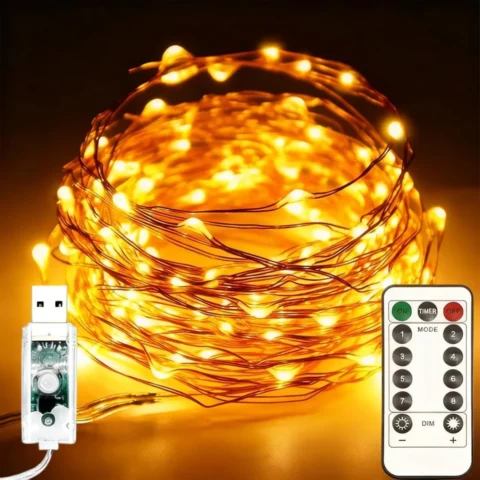
- Top up by USB if the set allows it. Which? lists one solar set that claims 12 nights from a full USB charge.
- Replace tired batteries where the set allows it: if run time falls even after sunny days, the rechargeable battery is the first suspect.
What to look for when buying a solar set
Which? found two main causes of failure in solar fairy lights: water getting into bulbs and chargers, and cables damaged by pulling during installation. Its test lights went through a 10-minute shower, an hour under water and a night in a freezer at minus 16°C. Look for a set that can take the same treatment:
- An IP rating on the panel, the battery box and the lights, with a last digit of 3 or higher.
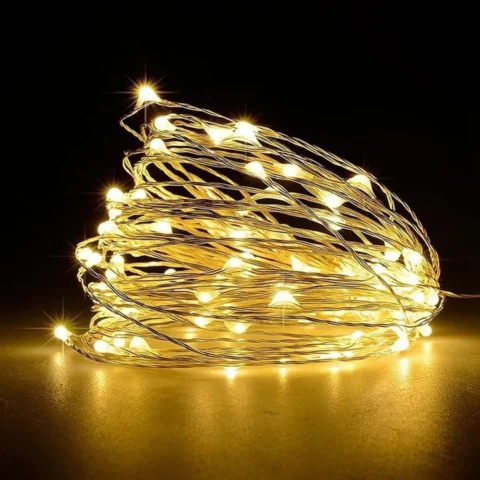
- A separate panel on a long lead, so the sun does not decide where the lights go.
- Replaceable rechargeable batteries rather than a sealed unit.
- A USB charging option for weeks of dull weather.
- Warm white or multicoloured LEDs that match the rest of your display, with a steady mode as well as flashing ones.
Fix the string with clips or ties and leave the cable slightly slack. Tugging a set into place was the biggest cause of failure in Which?’s solar fairy light tests.
Which should you choose?
Match the power source to the spot rather than to the product. As a rule of thumb:
| Your situation | Best power source |
|---|---|
| South-facing front garden, tree or hedge far from a socket | Solar, ideally with USB backup |
| Shaded or north-facing spot, or a covered porch | Battery with a timer |
| Roofline, large tree or a display you want bright all evening | Plug-in LED on an RCD-protected socket |
| Wreath, planter or door garland | Battery or solar fairy lights |
| Scotland in December | Battery, plug-in or solar with USB backup: under 7 hours of daylight in Edinburgh leaves little time to charge |
Check the power source in each listing of our outdoor Christmas lights before you plan the layout, and read our guide on how to hang outdoor Christmas lights safely for clips, cables and sockets.
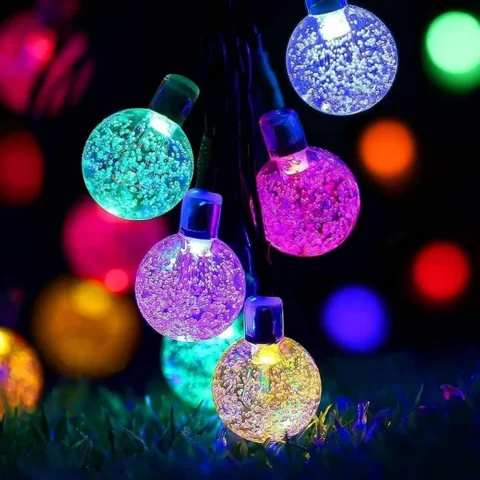
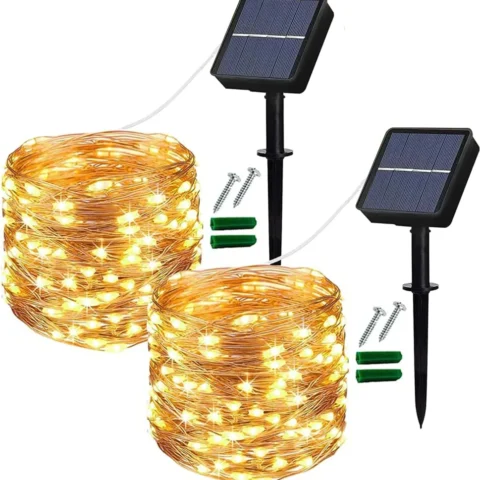
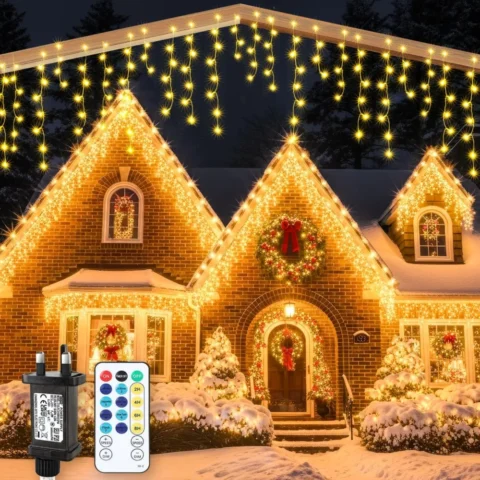
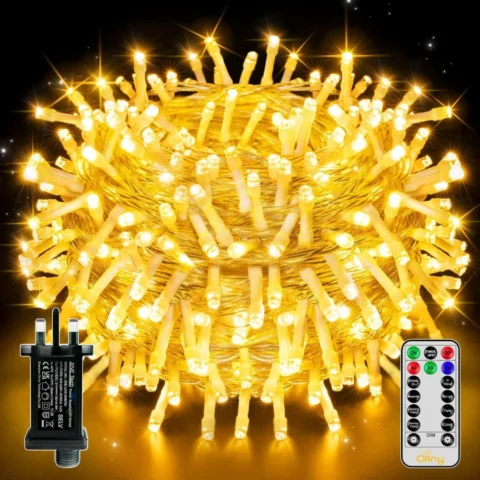
For wreaths and planters, battery strings from our fairy lights are the simplest option. A light-up reindeer or outdoor figure follows the same logic: it needs a socket nearby or a battery or solar pack, so check before you choose its spot on the lawn. For indoor sets and everything else, see the full Christmas lights range.
Frequently asked questions
Are solar outdoor Christmas lights any good?
Good ones are, within the limits of a British winter. In Which?’s long-term tests the best sets shone through the night after a short, sunny winter day and kept working for six years outdoors, while weaker ones lasted about an hour. Put the panel in direct sun for part of the day and pick a set made for outdoor use, with an IP rating whose last digit is 3 or higher.
Do solar Christmas lights work in winter in the UK?
Yes, but expect shorter and dimmer evenings. UK December sunshine averages 42.7 hours, a quarter of June’s, and the midday sun is only 11 to 15 degrees above the horizon on the shortest day. A south-facing, unshaded panel and a USB top-up in dull weeks make the difference.
What are the disadvantages of solar outdoor lights?
They depend on the weather, so run time varies from night to night and is shortest in December, when you want them most. They are dimmer than plug-in sets, and the panel has to sit in the sun even where the lights do not.
What are common problems with solar lights?
Which? found that water getting into bulbs and chargers, and cables damaged by tugging during installation, were the main causes of failure. Other usual culprits are a shaded or dirty panel, a panel lit at night by a porch or street light, and old rechargeable batteries.
What should you look for when buying outdoor solar lights?
A separate panel on a long lead, an IP rating whose last digit is 3 or higher, replaceable rechargeable batteries and, for Christmas, a USB charging option for dull spells. Compare the number of LEDs with the battery too: more bulbs on the same battery means a shorter night.
Are cheap solar lights any good?
Some are. In winter the battery, the panel and the seals matter more than the price: Which? found water ingress a common cause of failure, so look for a proper IP rating and replaceable batteries whatever you pay.
How long do battery Christmas lights last?
It depends on the set. Divide the battery life quoted on the pack by the hours the timer runs each evening to get the number of evenings per set of batteries. Fewer LEDs, a flashing mode and the timer all stretch that figure.
Can solar lights charge without direct sun?
Only weakly. Which? says solar lights charge properly only in direct sun, so put the panel where it gets direct sun for at least part of the day. In December the sun is low and the days are short, which is why the panel’s position matters more in winter than in summer.