LED or incandescent Christmas lights: which should you buy?
Incandescent Christmas lights can still be found online, but LEDs use almost 90% less electricity and run much cooler. Here is how the two compare on cost, safety, rules and glow.
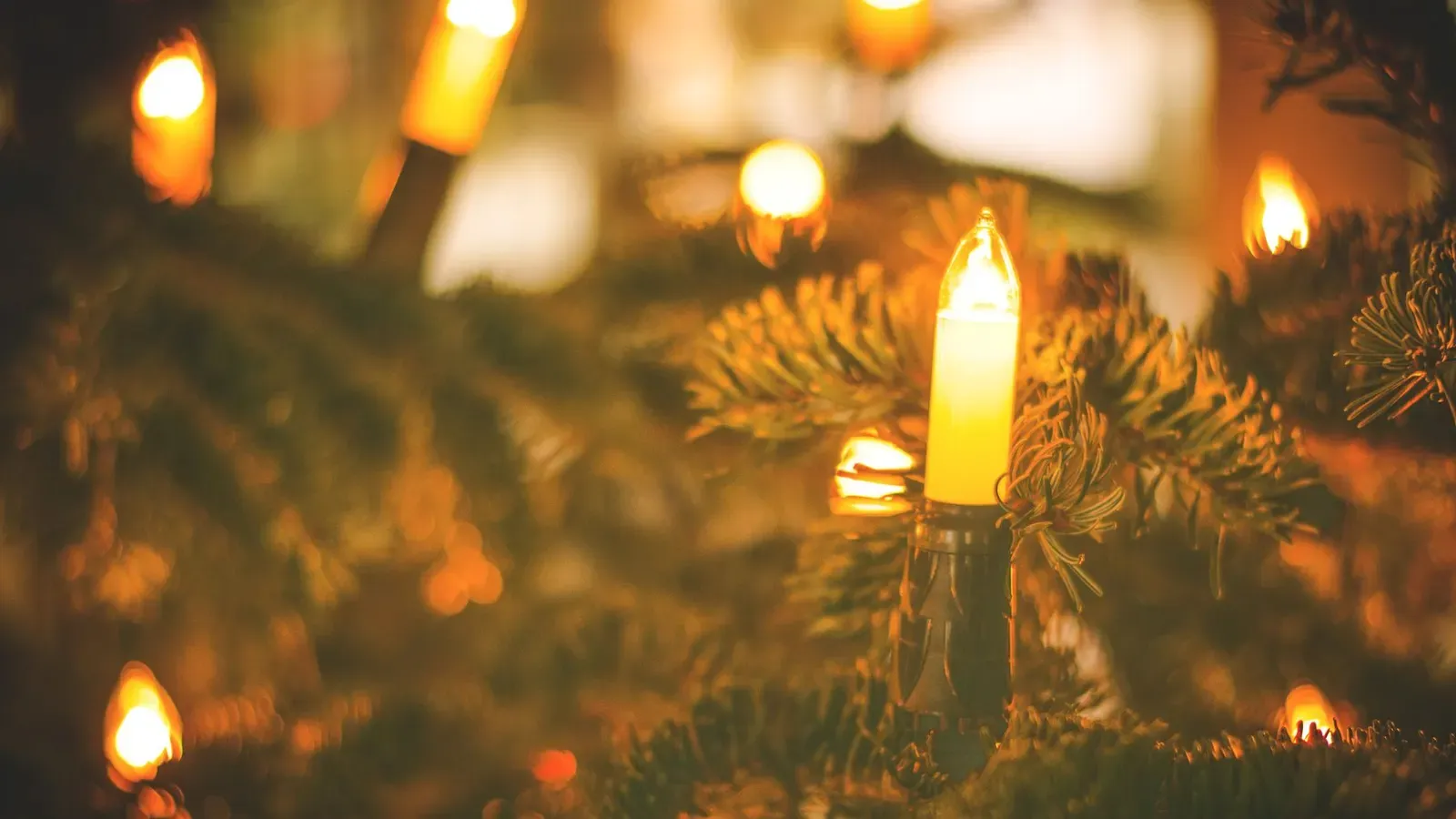
For most homes, LED Christmas lights are the better buy. They use almost 90% less electricity than incandescent (filament) sets. They also run much cooler and last many times longer. Incandescent Christmas lights keep one advantage, the warm and steady glow of a heated filament, and they can still be bought, mostly through online marketplaces. This guide works out the running costs, explains what the light bulb ban covers, lists the safety rules for older filament sets and shows how to get the same warm look from LEDs.
LED vs incandescent Christmas lights at a glance
An incandescent bulb makes light by heating a thin wire until it glows, so most of the power it draws ends up as heat. An LED makes light from a small semiconductor chip and wastes far less. Most of the differences below follow from that.
| Point | Incandescent | LED |
|---|---|---|
| Electricity | High | Almost 90% less, according to Which? |
| Heat | Bulbs can get very hot | Much less heat |
| Life | Shorter | Typically up to 60 times longer, according to Electrical Safety First |
| Light | Warm and steady, with an amber tint | Depends on the colour temperature: very warm white comes close, cool white looks colder |
| Failed bulb | Replace it before using the lights, with one of the same type and rating | Bulbs are often not replaceable, in which case the set is replaced |
Life varies by maker. Electrical Safety First also points out that LED sets have no filament and no glass bulbs to break.
How much do incandescent Christmas lights cost to run?
Which? measured LED chains of 200 and 400 bulbs in 2023. Running one for six hours a day from 1 December to 31 January cost 41p to 47p at the unit price it used, 27.35p per kWh. With LEDs using almost 90% less energy, the same display in filament bulbs would cost about ten times as much: roughly £4.10 to £4.70 for those two months.
For your own sets, read the wattage on the plug, the transformer or the box and use this sum: watts ÷ 1,000 × hours lit × price per kWh. The table uses six hours a day and an example price of 25p per kWh, so swap in your own tariff.
| Set (example wattage) | 31 days (December) | 62 days (1 Dec to 31 Jan) |
|---|---|---|
| 5 W LED set | 0.93 kWh, about 23p | 1.86 kWh, about 47p |
| 40 W filament set | 7.44 kWh, about £1.86 | 14.88 kWh, about £3.72 |
The setting changes the bill too. In the same Which? test, the twinkling-flashing mode cost 16p over the two months against 46p for the most power-hungry setting, using 64% less energy.
Are incandescent Christmas lights banned in the UK?
No UK law bans incandescent Christmas lights by name. The phase-outs since 2009 targeted general household lighting, and the reason given was energy use. When it announced the halogen ban in June 2021, the government said LEDs use up to 80% less power than halogen bulbs, last five times longer and would cut carbon emissions by 1.26 million tonnes a year.
What the light bulb ban covered
- September 2009 to September 2012: household incandescent bulbs withdrawn in steps under EU rules, starting with 100 W bulbs and reaching 40 W by 2012.
- 1 September 2018: mains-voltage halogen bulbs of the standard, non-directional shape.
- 1 September 2021: most remaining halogen bulbs.
- September 2023: most fluorescent tubes.
Where Christmas lights fit in
The UK’s 2021 lighting regulations apply to light sources that give out between 60 and 82,000 lumens. They do not mention Christmas or decorative lights by name, and their ecodesign requirements do not apply to light sources in battery-operated products.
Can you still buy incandescent Christmas lights?
Yes, but they are now a niche. Most sets sold in the UK as traditional or retro are LED, and some filament mini lights listed on marketplaces such as eBay UK are shipped from the United States. Check these points before you order:
- The bulb type in the specification, not the title: many sets with a traditional look use LEDs.
- The voltage and plug. Electrical Safety First says mains Christmas lights must have a UK 3-pin plug with a fuse. A set rated 120 V is made for the United States or Canada, not for UK 230 V mains.
- The safety standard. Warwickshire Fire and Rescue Service advises checking that Christmas tree lights conform to the British Standard.
Which is safer, LED or incandescent?
Electrical Safety First says extra-low voltage lights are the safest option, and most LED Christmas lights run at extra-low voltage, which significantly reduces the risk of electric shock. LEDs also generate less heat. If you keep a filament set, its advice for older lights is precise:
- Use only replacement bulbs of the same type and rating as the originals.
- Replace a failed bulb before using the lights, to prevent overheating.
- Never remove or insert a bulb while the set is plugged in.
- Never connect different sets together, and avoid adaptors and extension leads where you can.
- Keep the lights away from flammable decorations, and switch off and unplug them before bed or before going out.
- Outdoors, use only lights made for outdoor use, keep plugs and transformers indoors and plug into a 30mA RCD-protected socket.
After a year in the loft, check every set for damage, broken bulbs and loose wires, and do not use one with damaged wires or a damaged plug. If its bulbs cannot be replaced, Electrical Safety First says to buy a new set.
Warm white vs cool white: the incandescent look from LEDs
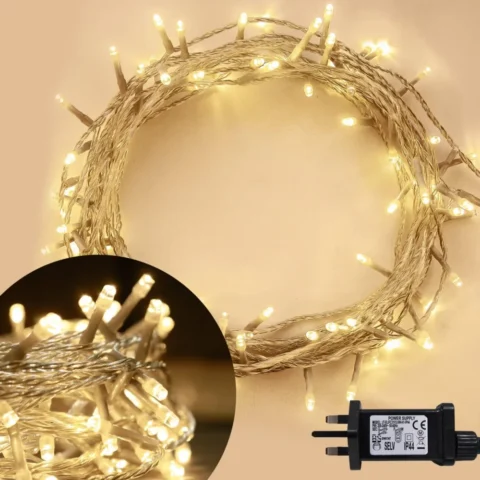
The colour of white light is measured in kelvin (K). Filament bulbs sit at the warm end of the scale, so an LED set sold as warm white is the closest match.
| White | Colour temperature | Look | Works well on |
|---|---|---|---|
| Very warm white | About 2,700 K | Golden, the closest match to filament bulbs | Indoor trees and wreaths |
| Warm white | 2,700 to 3,000 K | Warm and cosy | Trees, mantelpieces and windows |
| Cool white | 4,000 to 4,500 K | A purer, colder white | Rooflines and modern schemes |
The ranges are the Energy Saving Trust’s figures for household bulbs.
How to avoid mismatched whites
- Compare the kelvin figure rather than the name: two sets both called warm white can look different.
- Buy every set for one tree or one window at the same time and from the same product line, so the whites match.
- Group older sets in one zone instead of alternating them with new ones.
- For the steady glow of filament bulbs, use the steady-on setting rather than a flashing mode.
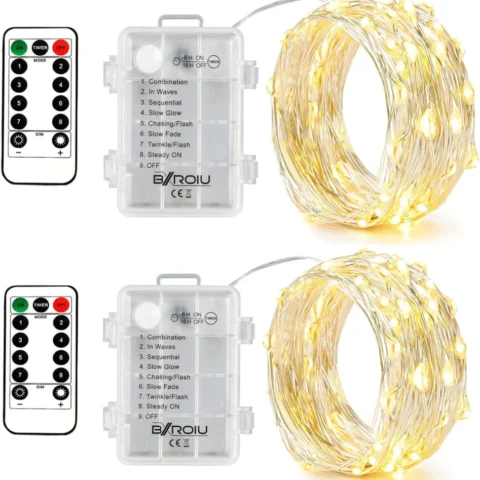
For mantelpieces, jars and wreaths with no socket nearby, battery-powered LED sets are the practical choice: browse our fairy lights for warm white strings.
Which should you buy?
The answer depends on where the lights go. LED wins in every case below except one, and you can compare every type side by side in our Christmas lights collection.
| Situation | Our pick | Why |
|---|---|---|
| Tree in a home with children or pets | LED | Less heat and, on most sets, extra-low voltage |
| Lights on for long evenings | LED | Almost 90% less electricity |
| Roofline, hedge or garden tree | LED made for outdoor use | Lower bills over long hours, on an RCD-protected socket |
| You want the old-fashioned glow | Warm white LED at 2,700 to 3,000 K | Closest look without the heat |
| A filament set you already own | Keep it, with replacement bulbs of the same type and rating | The exception: it works, if it passes the yearly check |
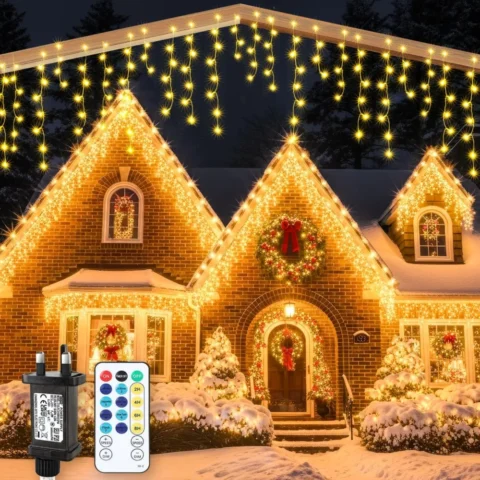
For the tree itself, start with our Christmas tree lights, then check our chart of how many lights a Christmas tree needs by height. For the front of the house, see the outdoor Christmas lights, or our guide to solar or battery Christmas lights if there is no outdoor socket.
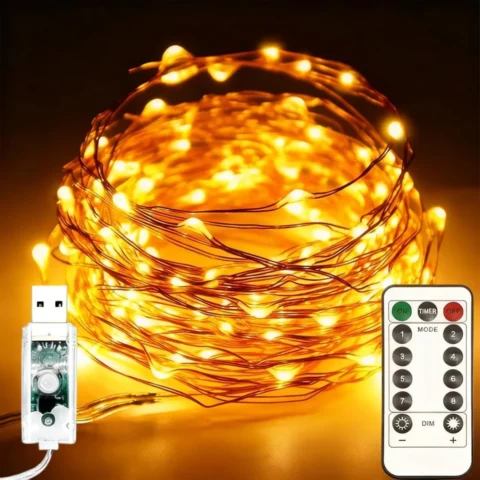
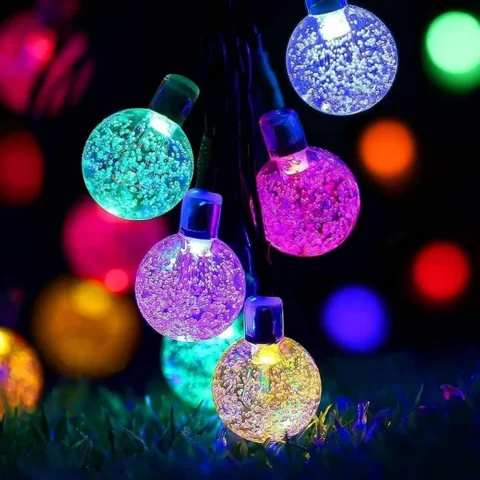
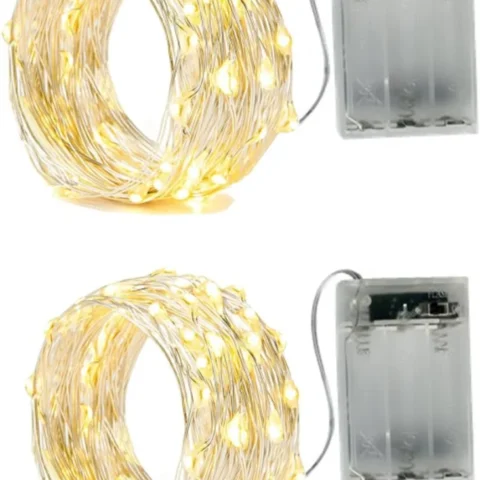
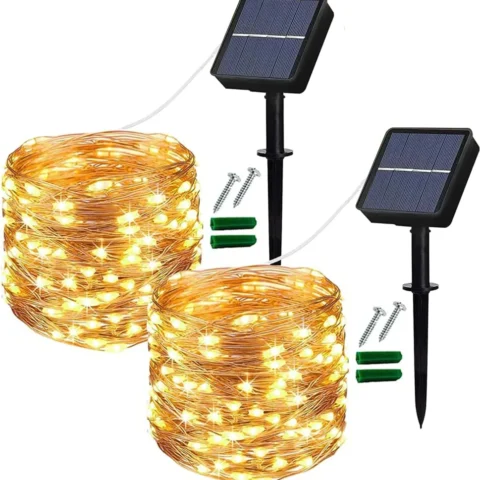
Whichever sets you pick from the Christmas lights range, buy the whole display in one go so the whites match, and check every set before it goes up.
Frequently asked questions
Can you still buy incandescent Christmas lights in the UK?
Yes, but they are no longer common: most sets sold as traditional are LED, and some filament sets on marketplaces are US imports made for 120 V. Before you order, confirm the bulb type in the specification, a 230 V rating with a UK 3-pin plug, and that the lights conform to the British Standard.
Why did the UK ban incandescent light bulbs?
To cut energy use and carbon emissions. Household filament bulbs were phased out between 2009 and 2012 under EU rules, and halogen bulbs followed in 2018 and 2021. The government said the 2021 switch to LEDs would save 1.26 million tonnes of CO2 a year.
Are incandescent Christmas lights safe?
A set in good condition, made for UK mains and used as the instructions say is legal to use, but it carries more risk than an LED set. The bulbs can get very hot, and a failed bulb has to be replaced before the lights are used again, to prevent overheating. Electrical Safety First says extra-low voltage lights are the safest, and most LED sets run at extra-low voltage and give off less heat.
Which is better, LED or incandescent Christmas lights?
LED, for almost every use: it uses almost 90% less electricity, runs much cooler and lasts far longer. Incandescent wins only on the quality of its glow, and a warm white LED set at 2,700 to 3,000 K gets close to it.
What are the downsides of incandescent Christmas lights?
They use far more electricity: Which? says LEDs need almost 90% less. The glass bulbs can get very hot and break, and LED sets typically last up to 60 times longer, according to Electrical Safety First. Every failed bulb also has to be swapped for one of the same type and rating.
Are incandescent light bulbs illegal now?
Not to own or use. The UK rules stop most general household filament and halogen bulbs being placed on the market, but bulbs you already have can stay in use. The regulations do not name Christmas lights, and battery-operated products fall outside their ecodesign requirements.
Do warm white LEDs look like incandescent lights?
They come close. Warm white LEDs around 2,700 to 3,000 K give the golden tone of a filament bulb, especially on a steady setting. Cool white, at around 4,000 K and above, looks colder next to them, so avoid mixing the two on one tree.