What is a gonk? The Christmas gonk craze explained
The bearded, faceless figures on British shelves every December have a British name and a Scandinavian past. Where gonks come from, what the word means and how they differ from gnomes.
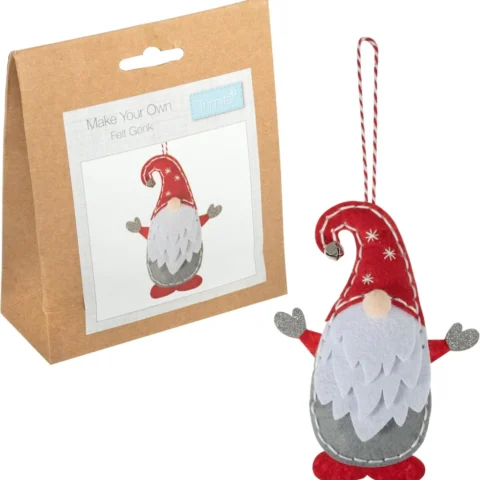
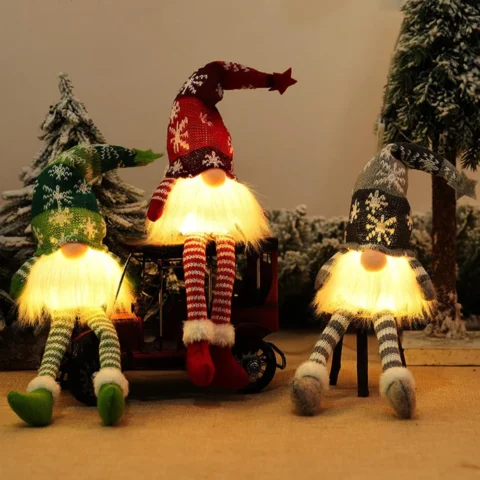
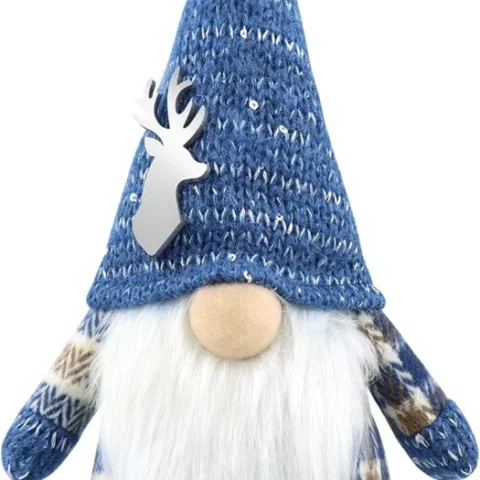
A gonk is a small, squat Christmas figure with a long beard and a tall hat pulled down over its eyes, so that only a round nose shows. The name is British: it was first given to a furry novelty toy made in London in the 1960s. The look is Scandinavian, borrowed from the tomte and the nisse, the household spirits of Nordic folklore. Today the word mostly means the fabric figures sold as Christmas decorations, from small shelf sitters to large figures for the hall, like the ones in our Christmas gonks and gnomes collection.
What is a gonk? The short answer
- 1960sthe first toys sold as gonks, created by the London inventor Robert Benson
- Tomte and nissethe Scandinavian household spirits behind the bearded Christmas gonk
- No eyesthe hat covers the face down to the nose
- Christmas Evewhen Scandinavian farm families left the spirit a bowl of porridge with butter
Where gonks come from
The 1960s toy that gave gonks their name
The first gonks were novelty toys created by Robert Benson, a Londoner, and they became a craze across the United Kingdom in the 1960s. They looked nothing like today’s Christmas figures: they were furry and egg-shaped. Some were dressed as Merseybeat rockers and sold as collectables, Ringo Starr and Peter Sellers both owned gonks, and the toys appear in the title sequence of Gonks Go Beat, a 1965 science-fiction film directed by Robert Hartford-Davis.
The craze spread to Canada and the United States, where the toy company Gund sold gonks on a large scale, inflatable vinyl ones included. Wiktionary, citing the Oxford English Dictionary, records the word as a proprietary name of arbitrary formation: it was invented for the toy rather than taken from an older word.
The Scandinavian spirit behind the Christmas gonk
The bearded Christmas gonk copies a much older figure: the nisse of Denmark and Norway, called tomte in Sweden and tonttu in Finland. In folklore he was a farmstead guardian no bigger than a child, dressed in grey with a red pointed cap, who did chores and looked after the animals. He also had a temper, and a nisse who was insulted took revenge.
- 14th century: the Revelations of Saint Birgitta record priests forbidding offerings to the “tomte gods”.
- 1555: Olaus Magnus pictures spirits working in a stable, probably the nisse.
- 1840s: the Danish artists Lorenz Frølich and Johan Thomas Lundbye draw the nisse as a Christmas visitor, and the julenisse and the jultomte become gift-bringers.
- 1881: Jenny Nyström’s illustration for Viktor Rydberg’s poem Tomten fixes the white beard and red cap in Sweden.
Jacob Grimm thought the name nisse came from Niels, the Scandinavian form of Nicholas, which would make the little spirit a namesake of Saint Nicholas. In the strict old Danish tradition the nisse was beardless, like a child; the long beard is a later change.
Gonk meaning: the other uses of the word
Outside December, gonk has a handful of other meanings, which is why searches for it turn up droids and slang dictionaries.
| Meaning | What it is |
|---|---|
| Christmas gonk | The bearded, faceless figure sold as a decoration |
| 1960s gonk | The original furry, egg-shaped toy |
| Gonk droid | The GNK power droid of Star Wars, a walking battery seen in the 1977 film |
| Slang | A stupid, ignorant or boorish person |
| New Zealand military slang | A nap |
Gonk vs gnome: what is the difference?
Both are small bearded men in pointed hats, and the Scandinavian languages barely separate them: a garden gnome is a trädgårdstomte, a garden tomte, in Swedish, a havenisse in Danish and a hagenisse in Norwegian. In Britain they are two different objects with two different histories.
| Gonk | Garden gnome | |
|---|---|---|
| Roots | The Scandinavian tomte and nisse; the name from a 1960s British toy | 19th-century Germany: a Dresden firm had ceramic dwarves in stock by 1841, and Gräfenroda was known for them by about 1860 |
| Arrived in Britain | As a toy in the 1960s, as a Christmas figure in the late 2010s | 1847, when Sir Charles Isham brought terracotta gnomes home to Lamport Hall in Northamptonshire |
| Face | Hidden: the hat comes down to the nose | Visible, often with a pipe |
| Material | Felt, knitted wool or faux fur, sometimes stoneware or glass | Terracotta, ceramic or resin |
| Where it goes | Indoors: shelves, mantelpiece, under the tree | Outdoors, in the garden |
| When | December, plus Easter, autumn and Halloween versions | All year |
The word gnome is older than both. The Swiss alchemist Paracelsus used it in the Renaissance for small beings about two spans tall who kept away from people.
Are gonks good luck?
In the folklore, yes, on conditions. A nisse treated with respect protected the farm, its crops and its animals; one that was ignored or insulted made trouble. On Christmas Eve families left him a bowl of porridge with butter on top as his payment.
In one tale a farmer put the butter at the bottom of the bowl instead of on top. The nisse thought he had been cheated and killed a cow, then found the butter under the porridge.
A shop-bought gonk carries none of those duties, but the guardian idea has stuck: sellers describe gonks as bringing luck and protecting the home, and styling guides put the biggest one by the front door.
Why Christmas gonks became so popular in the UK
The rise was quick. The wholesaler Inspirations wrote in 2021 that gonks had become one of the country’s favourite Christmas decorations within about five years. MFI’s 2025 guide puts the boom down to the fashion for Scandinavian design, more time spent decorating at home and gonk pictures shared on social media.
- More seasons: gonks are no longer only for Christmas, with pastel Easter gonks, autumn gonks with pumpkins and foliage, and darker Halloween ones.
- The Scandi look: a gonk in grey wool or red felt fits a scheme of white, wood and straw, explained in our guide to Christmas decor styles.
- Collecting: like the 1960s toys, they come in many sizes and outfits, which makes them easy to collect.
How to display gonks at Christmas
- In the hall or by the front door: one large gonk to greet visitors.
- On the mantelpiece or a shelf, between a garland and candlesticks. Our guide on how to decorate a mantelpiece for Christmas covers the rest of the arrangement.
- At the foot of the tree, where a pair of gonks hides a plain metal stand.
- On a windowsill or a bedside table: small gonks in twos or threes.
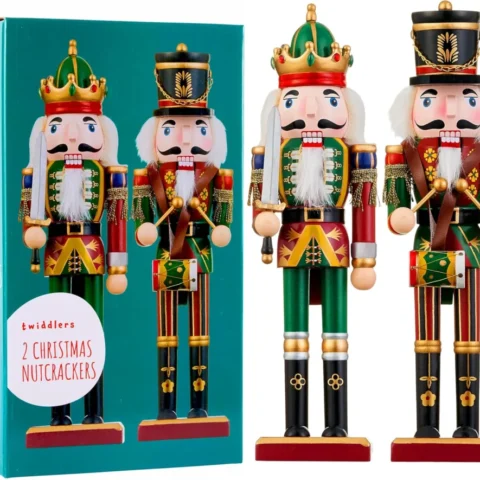
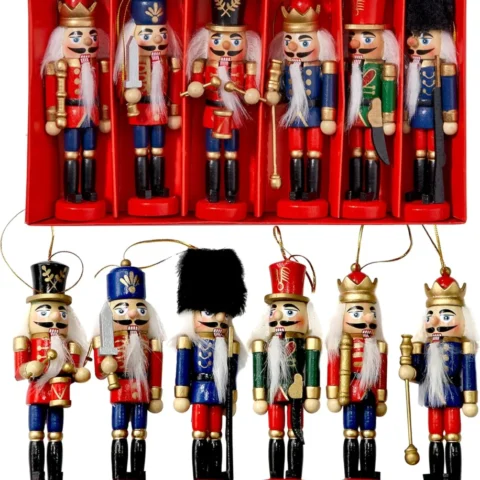
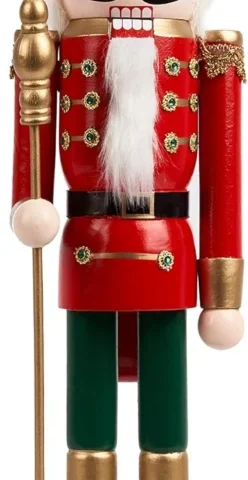
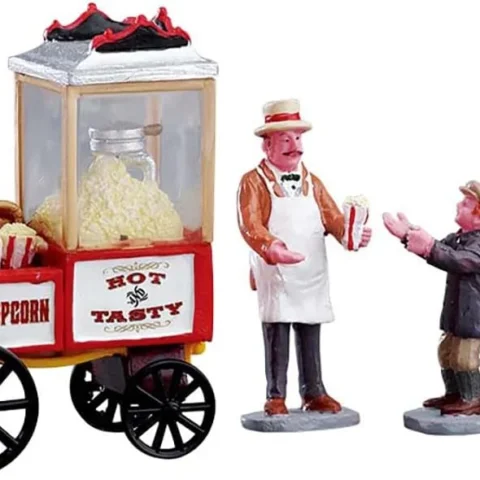
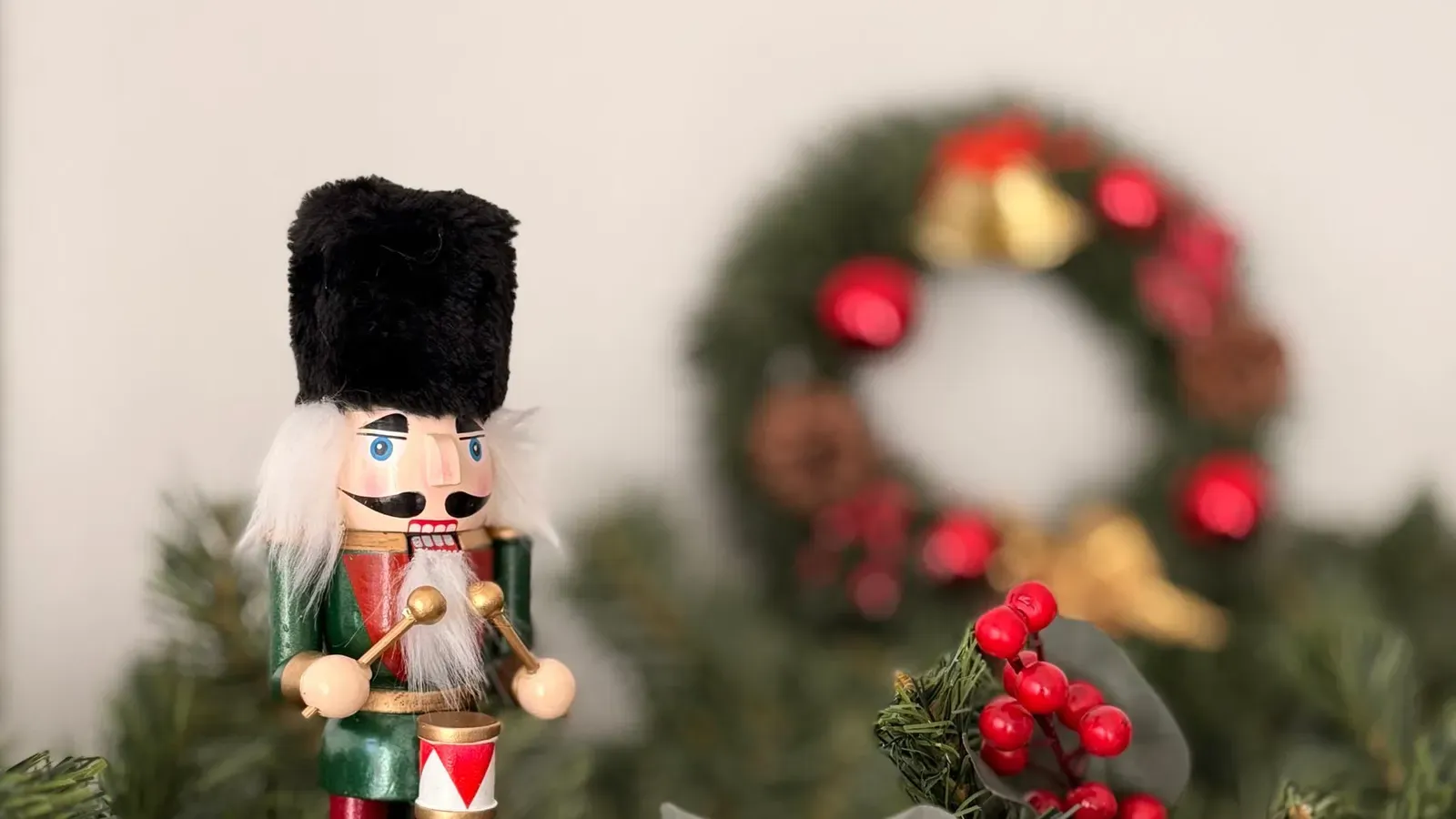
- In a Christmas village scene, next to snow globes, nutcrackers and miniature houses.
Most Christmas gonks are felt, wool or faux fur, and their beards hang low. Keep them away from real candles and open fires, or use LED candles on the same shelf.
Gonks sit with the other Christmas characters in our Nativity, Villages & Figurines range.
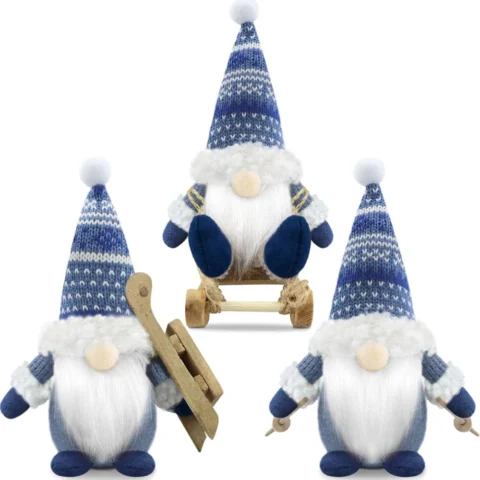
To build a whole scene around them, add houses, snow globes and nutcrackers from the same figurines and Christmas village collection.
Frequently asked questions
What is gonk slang for?
As slang, a gonk is a stupid, ignorant or boorish person. In New Zealand military slang it means a nap. Neither meaning has anything to do with the Christmas figure.
What is the difference between a gnome and a gonk?
A garden gnome shows its face, often holds a pipe and stays outdoors all year; it came to Britain from Germany in 1847. A gonk hides its eyes under its hat, is usually made of fabric and comes out indoors at Christmas, and its look comes from the Scandinavian tomte.
What nationality are gonks?
Both British and Scandinavian. The name and the first gonk toys are British, from 1960s London, while the bearded Christmas figure copies the nisse of Denmark and Norway and the tomte of Sweden.
What is the purpose of gonks?
Today they are decorations, with no job beyond sitting on a shelf for the season. Their folklore ancestor did have one: the nisse guarded the farm and its animals in return for respect and a bowl of Christmas porridge.
Are gonks good luck?
Folklore says the nisse brought good fortune to a household that treated him well and trouble to one that did not. A modern gonk is a decoration, but it is still sold as a small guardian of the home.
Are gonks just for Christmas?
No. Christmas is still their main season in Britain, but shops also sell pastel Easter gonks, autumn ones with pumpkins and leaves, and darker Halloween designs.
Are gonks still popular?
Yes. They moved from a Scandinavian niche to a fixture of British Christmas shelves between the late 2010s and the early 2020s, and they now come in versions for Easter and Halloween too.
What are gnomes without eyes called?
In Britain they are usually called gonks, or Scandinavian gnomes. The faceless style comes from the Nordic household spirit called tomte in Sweden, nisse in Norway and Denmark and tonttu in Finland.