Nutcracker soldiers: history, meaning and how to display them
Where nutcracker soldiers come from, why they are kings and soldiers, what they mean at Christmas, why a handmade one costs more, and how to display them from the front door to the tree.
Nutcracker soldiers are wooden figures with a hinged jaw, made in the Ore Mountains of Saxony, the Erzgebirge, since the late 17th century. In Germany they are a good luck symbol, and their place at Christmas comes from a story: E. T. A. Hoffmann’s tale of a nutcracker given on Christmas Eve, which became Tchaikovsky’s ballet. Below are their history, what they mean, why they are dressed as soldiers and kings, why a handmade one costs more, and how to display nutcracker Christmas decor around the house. Ready-made ones are gathered in our Christmas nutcrackers collection.
Nutcracker decorations at a glance
- Late 1600sthe first nutcracker dolls in the Ore Mountains of Saxony
- 1816E. T. A. Hoffmann publishes The Nutcracker and the Mouse King
- 1872Wilhelm Füchtner starts making nutcrackers on a lathe in Seiffen
- 18 December 1892Tchaikovsky’s ballet The Nutcracker opens in St Petersburg
Where nutcracker soldiers come from
Nutcrackers shaped as soldiers, knights and kings have existed since at least the 15th century. The figure we know, a person with a large mouth that opens when you lift a lever, comes from the Erzgebirge. When silver and tin mining declined there, the villages turned to woodwork, and Seiffen built its living on wooden toys.
| Date | What happened |
|---|---|
| Late 17th century | Nutcracker dolls appear in the Ore Mountains; one story credits a craftsman from Seiffen with the first |
| 1699 | Johann Friedrich Hiemann takes Seiffen toys to the toy market in Nuremberg |
| 1816 | E. T. A. Hoffmann publishes Nussknacker und Mausekönig, The Nutcracker and the Mouse King |
| 1844 | Alexandre Dumas publishes a French retelling, the version the ballet later used |
| 1872 | Friedrich Wilhelm Füchtner, later called the father of the nutcracker, starts mass production on a lathe in his Seiffen workshop |
| 18 December 1892 | Tchaikovsky’s ballet The Nutcracker opens at the Mariinsky Theatre in St Petersburg |
| After 1945 | American soldiers stationed in Germany bring nutcrackers home as souvenirs |
| 1954 | George Balanchine’s production for New York City Ballet opens, the start of its yearly Christmas run |
The story that tied nutcrackers to Christmas
In Hoffmann’s tale, the Stahlbaum children find a nutcracker among their presents on Christmas Eve, and their father makes Marie its special caretaker. Fritz breaks its jaw, and Marie bandages it with a ribbon. That night the nutcracker comes alive and leads the toy soldiers against an army of mice and their seven-headed king. He turns out to be the nephew of the children’s godfather, Drosselmeier, under a curse, which Marie breaks. The ballet, choreographed by Marius Petipa and Lev Ivanov, is adapted from Dumas’s version, and its heroine is usually called Clara.
The ballet is now a fixture of the Christmas season, and in the United States it brings major ballet companies a large share of their yearly ticket revenue.
Seiffen and the other Ore Mountain decorations
Seiffen, a village at 650 m in the Ore Mountains, still makes the region’s Christmas pieces. The nutcracker has three companions there, from the same workshops:
- The smoking man (Räuchermann), a figure that burns an incense cone inside and puffs the smoke out of its mouth.
- The Christmas pyramid, a wooden carousel turned by the heat of candles rising to a propeller at the top.
- The Schwibbogen, a candle arch shaped like the entrance to a mine.
The Nussknacker Museum in Neuhausen, Saxony, keeps original nutcracker dolls.
What does a nutcracker mean at Christmas?
The meaning depends on where you start.
- Luck and protection: nutcrackers are a good luck symbol in Germany, given as keepsakes to bring the family luck and guard the home. A folktale tells of a puppet-maker who won a nut-cracking contest by carving a doll with a lever for a mouth.
- A joke at the expense of power: the early figures included kings and soldiers, and making the ruling class crack nuts with their teeth was a piece of satire.
- The Christmas story: thanks to Hoffmann and Tchaikovsky, the nutcracker is the present that comes alive on Christmas Eve and turns into a prince.
Why do nutcrackers look like soldiers?
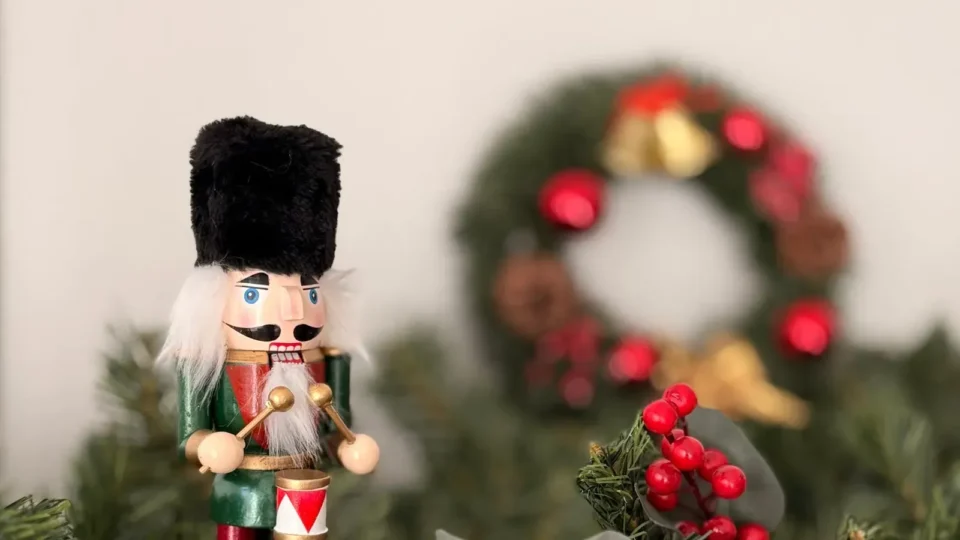
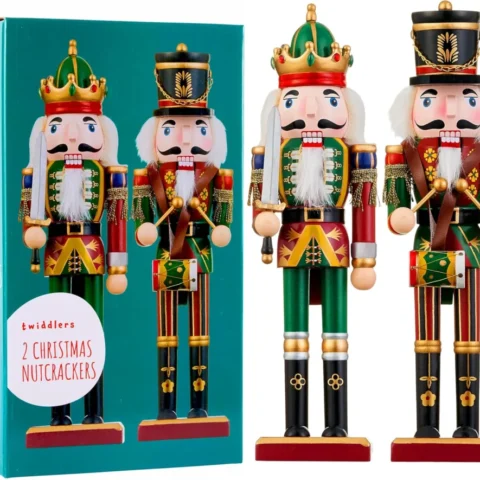
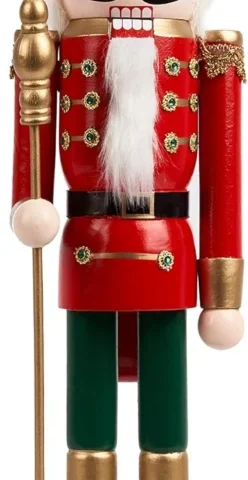
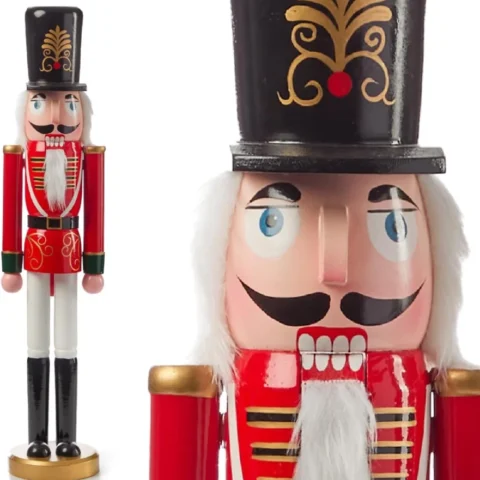
Because the carvers portrayed the people around them, above all figures of authority: kings and royalty, policemen and soldiers from different armies, as well as miners. To British eyes, the red tunic and tall black hat of many modern designs look like the Foot Guards at Buckingham Palace, but the originals were German soldiers and kings. Modern makers carve almost anyone, famous people and pop-culture characters included.
Why are nutcrackers so expensive?
A handcrafted Erzgebirge nutcracker is built from many separate wooden parts, turned on a lathe, assembled and finished by hand with paint, fur and fabric, and the jaw has to work. Seiffen workshops such as Christian Ulbricht still make them this way. Machine-made decorations are simpler, and many modern nutcrackers are purely decorative.
| Type | Made from | What you pay for |
|---|---|---|
| Handcrafted Erzgebirge nutcracker | Turned and carved wood | Handwork, many turned parts, a working jaw, a maker’s name |
| Decorative wooden nutcracker | Wood, machine-made | Size and paint finish; the jaw may not crack anything |
| Large figure for a porch or hall | Wood, resin or plastic, sometimes lit | Height, weather resistance, built-in lights |
| Tree ornament | Wood, glass or plastic | Detail at a small size, a hanging loop |
| Collectable | Porcelain, silver or brass | Material and maker |
How to display nutcracker Christmas decor
Nutcrackers look best in pairs, lines or groups rather than scattered one per shelf.
- On guard at the door: one tall nutcracker on each side of the front door or the fireplace. Outdoors, use only figures sold as weather resistant, and bring wooden ones in.
- A mantelpiece parade: line them up in height order, tallest at the ends, with a garland behind them. Our guide on how to decorate a mantelpiece for Christmas covers the garland and the lights.
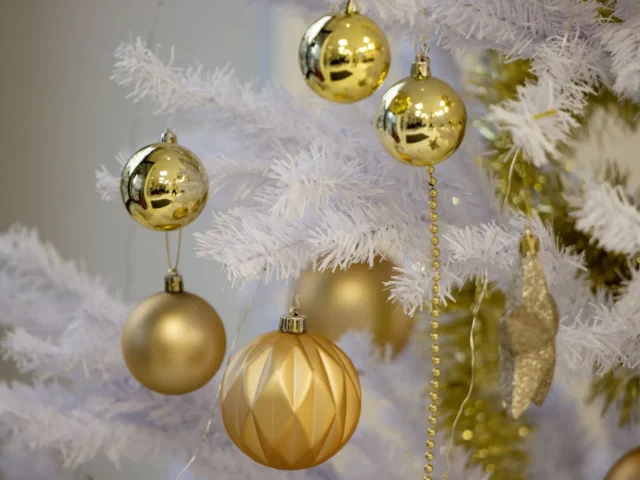
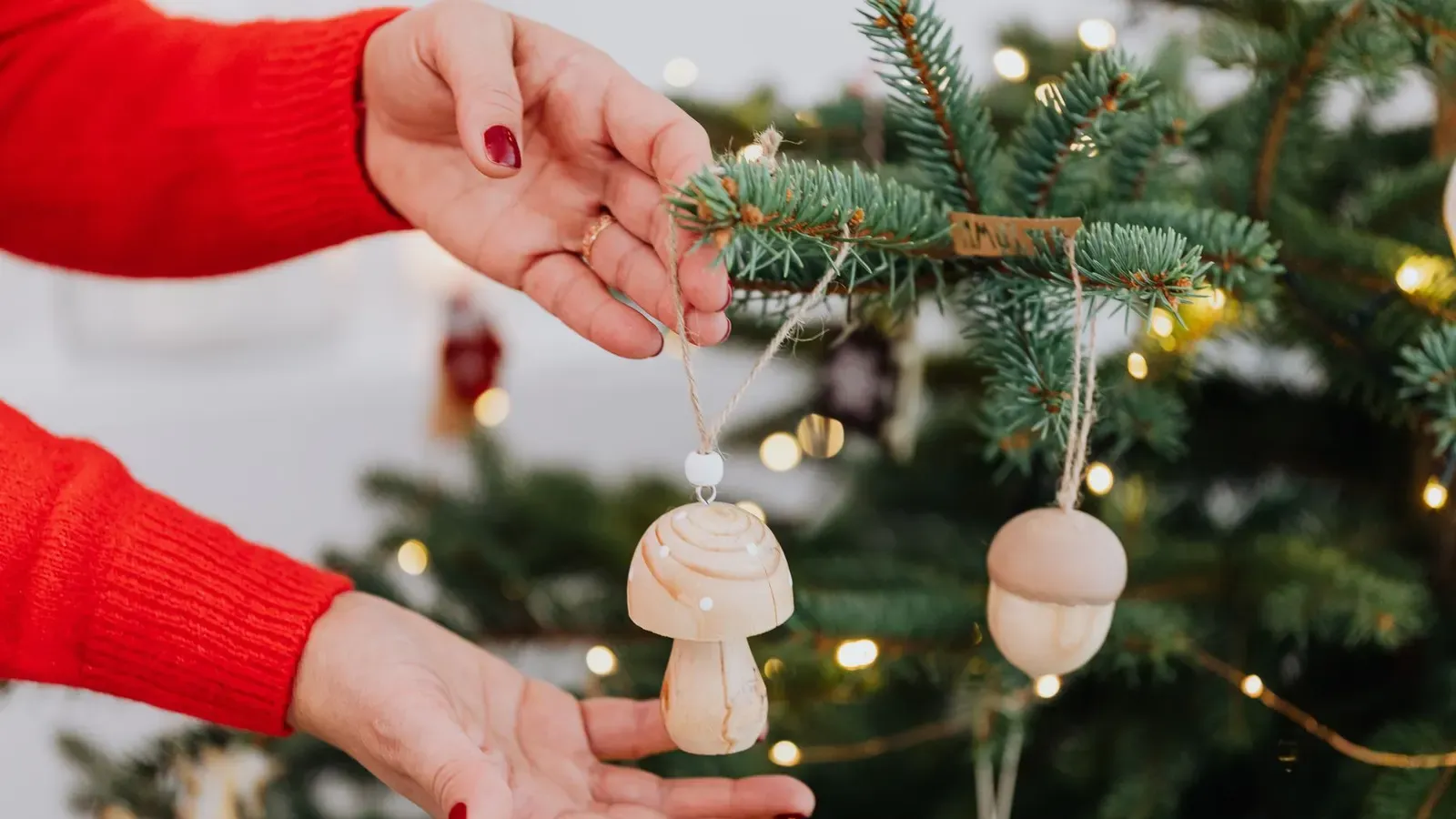
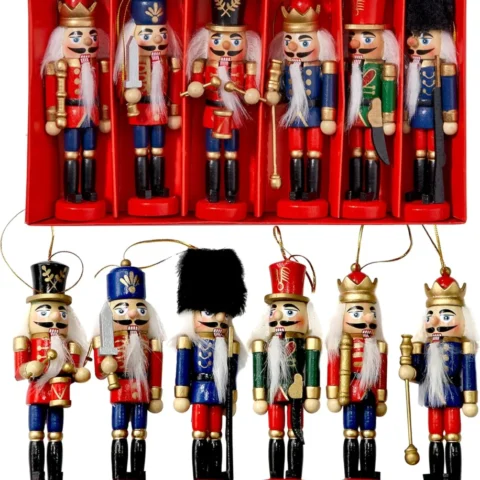
- A nutcracker tree: hang small nutcracker ornaments among red, gold and white baubles from our tree decorations.
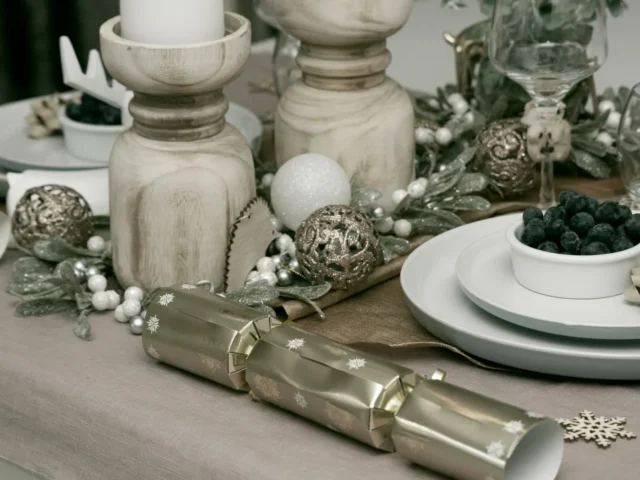
- On the table: one small nutcracker at each place, holding the name card, or a large one in the centre with candles around it.
- An Ore Mountain corner: a nutcracker with a candle arch, a pyramid and a smoking man, set next to the village houses and figures in our Nativity, Villages & Figurines range.
- A collection shelf: group them by type, kings with kings and soldiers with soldiers.
To see where nutcrackers fit in this year’s colour schemes, read our Christmas decorating trends for 2026.
In Hoffmann’s story, Fritz breaks the nutcracker’s jaw on the first evening. A decorative nutcracker is not built for real nuts: keep those for a metal nutcracker, and keep wooden figures away from radiators and damp, which can split the wood and lift the paint.
How to paint and decorate your own nutcracker
An unpainted wooden nutcracker makes a good December craft for older children and adults. Acrylic paint is the usual choice on wood: it is water-based and dries quickly.
- Sand any rough patches lightly and wipe off the dust.
- Paint the large areas first, such as the jacket, trousers and hat, and let each coat dry before the next.
- Add the details with a fine brush: buttons, belt, epaulettes, eyes and a red mouth.
- Glue on a beard and hair of faux fur or wool.
- Seal the paint with a coat of clear varnish so it does not chip.
To decorate a giant nutcracker, change the props rather than the paint: a small wreath on its arm, a bow at the neck, a string of fairy lights or a sprig of holly in the hat. Ready-painted figures are in our nutcracker collection.
For a whole Christmas scene around them, add snow globes, village houses and figures from our Christmas figurines collection.
Frequently asked questions
What does a nutcracker mean at Christmas?
In Germany it is a good luck symbol, traditionally given to bring the family luck and protect the home. At Christmas it also stands for Hoffmann’s story and Tchaikovsky’s ballet, in which a nutcracker given on Christmas Eve comes alive and becomes a prince.
Are nutcrackers good luck?
In German tradition, yes: they were given as keepsakes to bring luck and guard the household. Placing a pair by the front door or the fireplace, like sentries, plays on that idea.
Why do nutcrackers look like British soldiers?
They do not copy British soldiers. The carvers of the Ore Mountains portrayed German kings, soldiers and policemen, but the red tunic and tall black hat of many modern designs look to British eyes like the Foot Guards’ uniform.
Why are nutcrackers so expensive?
A handcrafted Erzgebirge nutcracker is made of many wooden parts, each turned or carved, then assembled and finished by hand with paint, fur and fabric, with a jaw that works. Seiffen workshops such as Christian Ulbricht still work this way.
What colour is the original nutcracker?
There is no single original colour. Ore Mountain nutcrackers are traditionally painted in bright colours, and the first figures wore the clothes of the kings, soldiers, policemen and miners they portrayed.
What kind of paint do you use for nutcrackers?
Acrylic paint, which grips bare wood, dries quickly and cleans up with water. Use a fine brush for the face and buttons, and finish with clear varnish so the paint does not chip when the figure is handled.
How do you display nutcrackers?
In pairs or groups: one on each side of the door or the fireplace, a line along the mantelpiece in height order, or several together on a shelf with a garland. Small ones work as place-card holders on the Christmas table.
Where do nutcrackers come from?
From the Ore Mountains, the Erzgebirge, in Saxony, Germany, where nutcracker dolls were made from the late 17th century. The village of Seiffen still makes them, and Wilhelm Füchtner began producing them on a lathe there in 1872.