The twelve days of Christmas: when they start and what they mean
They start on Christmas Day, not before it, and end on Twelfth Night. Here are the dates for 2026 to 2027, what falls on each day and what the carol’s gifts do and do not mean.

The twelve days of Christmas start on Christmas Day and end on Twelfth Night, the evening of 5 January, the eve of Epiphany. That is the Church of England’s count; some traditions start a day later and finish on 6 January. For Christmas 2026 the first day is Friday 25 December and the twelfth is Tuesday 5 January 2027. Below are the dates day by day, the feasts and customs that fall in them, the gifts in the carol and the truth about the claim that the song is a secret catechism.
When do the 12 days of Christmas start?
On Christmas Day. Advent, which begins on Advent Sunday (29 November in 2026), is the run-up; the twelve days are the celebration that follows. The Council of Tours set the idea down in 567, when it proclaimed the twelve days from Christmas to Epiphany a sacred and festive season.
25 or 26 December?
Western churches count 25 December as the first day, which makes 5 January the twelfth day and its evening Twelfth Night. Counting from 26 December instead moves the twelfth day to 6 January, Epiphany itself. Both counts finish at the same point: the arrival of the wise men on 6 January.
Why some calendars start on 14 December
Twelve-day countdowns that finish on Christmas Day start on 14 December, a Monday in 2026. As Wikipedia puts it, the commercial calendar has encouraged the mistaken idea that the twelve days end on Christmas Day rather than begin on it. That stretch belongs to Advent, the season of advent calendars that count from 1 to 24 December, and our page on how many days until Christmas keeps the countdown. The twelve days only begin once the last door is open.
The 12 days of Christmas in order: dates for 2026 to 2027
The dates never move; only the weekdays change. This is the Church of England count, with the feasts of the traditional Western calendar and the UK bank holidays.
| Day | Date | Feast or custom |
|---|---|---|
| 1 | Friday 25 December 2026 | Christmas Day |
| 2 | Saturday 26 December | St Stephen’s Day and Boxing Day; the bank holiday moves to Monday 28 December |
| 3 | Sunday 27 December | St John the Evangelist |
| 4 | Monday 28 December | Holy Innocents, also called Childermass |
| 5 | Tuesday 29 December | Thomas Becket |
| 6 | Wednesday 30 December | An ordinary working day between the bank holidays |
| 7 | Thursday 31 December | New Year’s Eve, Hogmanay in Scotland |
| 8 | Friday 1 January 2027 | New Year’s Day; the Circumcision of Christ in the church calendar |
| 9 | Saturday 2 January | Basil the Great and Gregory of Nazianzus |
| 10 | Sunday 3 January | Holy Name of Jesus |
| 11 | Monday 4 January | Bank holiday in Scotland, in place of 2 January |
| 12 | Tuesday 5 January | Twelfth Night, in the evening |
| After | Wednesday 6 January | Epiphany, the feast of the wise men |
In the following seasons, Christmas Day falls on a Saturday in 2027, with Twelfth Night on Wednesday 5 January 2028, and on a Monday in 2028, with Twelfth Night on Friday 5 January 2029.
What the twelve days of Christmas mean
The twelve days are Christmastide, the church season that celebrates the birth of Jesus, and they lead to Epiphany on 6 January, when the nativity story has the wise men reach the infant Jesus. In medieval England they were twelve days of feasting and merrymaking that built up to Twelfth Night, with a Lord of Misrule chosen to lead the revels.
Twelfth Night customs
- Twelfth cake: a bean and a pea were baked inside, and the man who found the bean was king for the night, the woman who found the pea queen.
- Wassailing: groups sang from door to door, and in orchards the apple trees were wassailed on Twelfth Night to bring a good harvest. Both customs survive in parts of the UK.
- The Baddeley Cake: since 1795, an actor’s bequest has paid for cake and punch for the company at the Theatre Royal, Drury Lane, every 6 January.
- Decorations: a superstition says it is unlucky to leave them up after Twelfth Night, and in some versions to take them down before it.
When the holiday ended
Distaff Day, 7 January, was the day household work traditionally started again; in 2027 it is a Thursday. Plough Monday, the first Monday after Epiphany (11 January in 2027), marked the start of the farming year in England. The commonest custom was to drag a plough from house to house to collect money, recorded mostly in Lincolnshire, Northamptonshire and East Anglia, and later as far north as Northumberland. The Whittlesea Straw Bear Festival keeps a version of the custom going; its 2027 dates are Friday 15 to Sunday 17 January.
The 12 gifts in the twelve days of Christmas carol
The carol was first printed in London around 1780, in a children’s book called Mirth Without Mischief. Many early sources describe it as a memory-and-forfeits game: the leader recited a verse, each player repeated it, and a slip cost a forfeit. The tune most people sing today comes from the English composer Frederic Austin, whose arrangement Novello published in 1909.
| Day | Gift | Total over the 12 days |
|---|---|---|
| 1 | A partridge in a pear tree | 12 |
| 2 | Two turtle doves | 22 |
| 3 | Three French hens | 30 |
| 4 | Four calling birds | 36 |
| 5 | Five gold rings | 40 |
| 6 | Six geese a-laying | 42 |
| 7 | Seven swans a-swimming | 42 |
| 8 | Eight maids a-milking | 40 |
| 9 | Nine ladies dancing | 36 |
| 10 | Ten lords a-leaping | 30 |
| 11 | Eleven pipers piping | 22 |
| 12 | Twelve drummers drumming | 12 |
Because every verse repeats the gifts before it, the true love sends 364 gifts in all, 184 of them birds. A few lines have changed over the years:
- Calling birds were colly birds before Austin. Colly is a dialect word, found in Somerset and elsewhere, meaning black, so they were blackbirds.
- The five gold rings are jewellery in the 1780 illustration, though some readers take them for ring-necked pheasants or goldfinches. Austin gave the line its long, drawn-out flourish.
- Austin also put “On” at the start of each verse and changed the order of the last four.
- The partridge in a pear tree may point to France: the red-legged partridge perches in trees more often than the common partridge, and it was not successfully introduced into England until about 1770.
What do the gifts mean? The catechism theory
A popular story says the carol was a coded catechism for young English Catholics, written while practising Catholicism was against the law, from 1558 to 1829. The Canadian hymnologist Hugh D. McKellar put the idea forward in 1979 without offering any evidence, and two priests, Hal Stockert and James Gilhooley, repeated it in the 1980s and 1990s. These are the meanings usually given, as listed by the priest George W. Rutler:
- Partridge: Christ, with the pear tree as a contrast to the forbidden tree of Genesis.
- Two turtle doves: the Old and New Testaments.
- Three French hens: faith, hope and charity, the three theological virtues.
- Four calling birds: the four evangelists, or the four major prophets.
- Five gold rings: the five wounds of Christ.
- Six geese: the six days of creation.
- Seven swans: the seven gifts of the Holy Spirit.
- Eight maids: the eight Beatitudes.
- Nine ladies: the nine choirs of angels.
- Ten lords a-leaping: the Ten Commandments.
- Eleven pipers: the eleven faithful apostles.
- Twelve drummers: the twelve points of the Apostles’ Creed.
Is the hidden meaning true?
Almost certainly not. Snopes, as reported by Wikipedia, rejects the theory, and Wikipedia adds that nothing on the list would distinguish Catholics from Protestants, so none of it needed hiding. Rutler himself concludes that the code is probably not real: he points to the song’s French origins and notes that many of the symbols are not specific to Catholics.
What to do during the twelve days of Christmas
- Keep the tree up until Twelfth Night. A real tree bought in early December can be dry by then, while one from our artificial Christmas trees lasts the twelve days and many Christmases after.
- Bake a Twelfth cake for 5 January with a dried bean and a dried pea inside, and crown whoever finds them.
- Play the carol the old way, as a memory game: each player adds the next gift, and anyone who slips pays a forfeit.
- Join an orchard wassail or a round of carol singing on Twelfth Night.
- Mark Epiphany on 6 January. The star on top of the tree stands for the Star of Bethlehem, the one that guided the wise men.
- Spread the presents out, with one small gift a day, as in the song.
Stars and angels for the top of the tree, and baubles for the branches below, are in our tree decorations range.
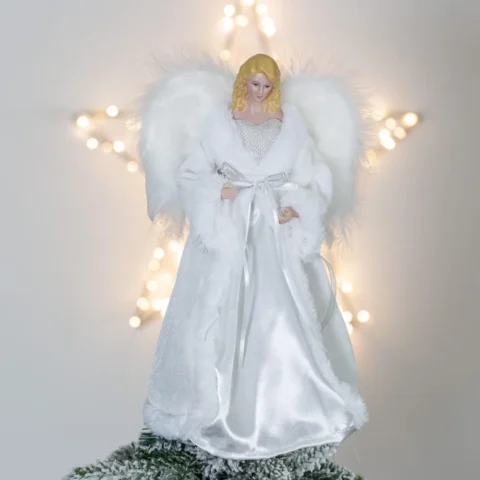
The Christmas Workshop
White angel tree topper, diamante bodice, feathered wings, 30 cm
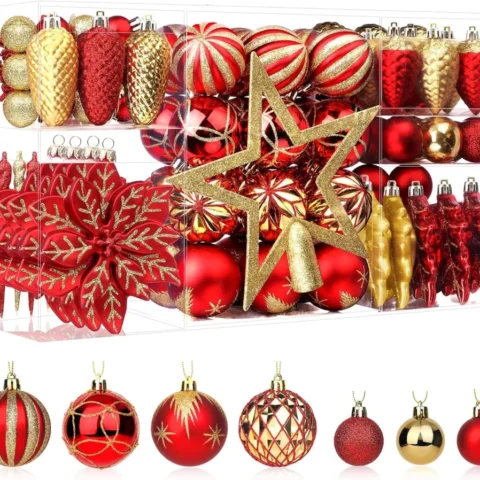
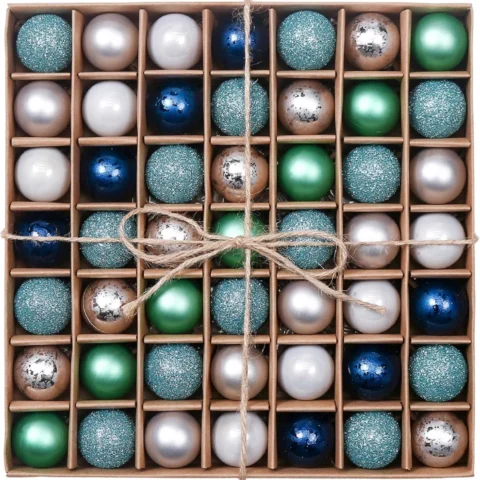
When the twelve days end: taking the decorations down
Tradition puts the decorations away on Twelfth Night or the next day, Epiphany: in the 2026 to 2027 season, the evening of Tuesday 5 January or during Wednesday 6 January. Our guide on when to take down Christmas decorations covers the superstition, the other dates people use and what to do with a real tree. As you pack up, note anything that broke, so you know which Christmas tree decorations to replace next year.
Frequently asked questions
What day should you start the 12 days of Christmas?
On Christmas Day, 25 December, which is day one in the Church of England’s count. In 2026 that is a Friday, so the twelfth day falls on Tuesday 5 January 2027. Traditions that start counting on 26 December finish on 6 January instead.
What are the 12 days of Christmas in order?
They run from 25 December to 5 January: Christmas Day, St Stephen’s Day (Boxing Day), St John’s Day, Holy Innocents and Thomas Becket on the 29th, then New Year’s Eve, New Year’s Day and the first days of January up to Twelfth Night. Epiphany follows on 6 January.
What are the 12 gifts in the Twelve Days of Christmas?
A partridge in a pear tree, then turtle doves, French hens, calling birds, gold rings, geese, swans, milkmaids, dancing ladies, leaping lords, pipers and drummers, rising from one to twelve of each. Counting every repeat, the singer receives 364 gifts.
What does ten lords a-leaping represent?
In the catechism theory first put forward in 1979, the ten lords stand for the Ten Commandments. There is no evidence that the song was written as a code, and nothing on the list was specific to Catholics.
What is the true meaning of the 12 days of Christmas?
They are Christmastide, the season that celebrates the birth of Jesus, running from Christmas Day to the eve of Epiphany. The Council of Tours declared the twelve days a sacred and festive season in 567.
Is Twelfth Night on 5 or 6 January?
The Church of England keeps Twelfth Night on 5 January, the night before Epiphany. If you start counting on 26 December, the twelfth day becomes 6 January, which is why both dates are used for taking decorations down.
What should you do during the 12 days of Christmas?
Traditionally, keep celebrating: visit people, feast and leave the decorations up. Old customs include a Twelfth cake with a hidden bean and pea, wassailing apple trees on Twelfth Night and the carol itself played as a memory game with forfeits.
What is the original version of the Twelve Days of Christmas?
The oldest printed version appeared in London around 1780 in Mirth Without Mischief. It had colly birds, meaning blackbirds, where we now sing calling birds; Frederic Austin’s 1909 arrangement fixed the tune and wording most people know.