Traditional British Christmas decorations and what they mean
From holly and the kissing bough to Christingles and crackers: where Britain’s Christmas decorations came from, what they mean and which ones homes still put up.
Most traditional British Christmas decorations are older than the Christmas tree. Holly and ivy were part of London’s Christmas by 1444, mistletoe has been linked with Christmas since the 17th century, and the tree, the card and the cracker all took hold between 1800 and 1850. Below is where each traditional decoration came from and what it means, the traditional colours, how an old-fashioned tree was dressed and which of these decorations British homes still put up.
Traditional Christmas decorations at a glance
| Decoration | Earliest date | Where it comes from |
|---|---|---|
| Holly, ivy and bay | 1444, in John Stow’s Survey of London | Evergreens brought indoors in winter |
| Mistletoe | 17th century; the kiss first recorded in 1784 | Robert Herrick’s poems, then a comic opera |
| Christmas tree | 1800, at Windsor | Germany, via Queen Charlotte and Prince Albert |
| Tinsel | About 1610 | Nuremberg, made from real silver |
| Glass baubles | 1847 | Glassblowers in Lauscha, Germany |
| Christmas cards | 1843 | Henry Cole in London |
| Crackers | 1847 | Tom Smith, a London confectioner |
| Nativity scene | 1223 | St Francis of Assisi, at Greccio in Italy |
| Advent wreath | 1839; on British television in 1964 | Johann Hinrich Wichern in Hamburg |
| Christingle | 1747; in the UK since 1968 | The Moravian Church in Germany |
| Stockings | Christmas Eve use from the early 1800s | The legend of St Nicholas |
| Yule log | 1648, as the “Christmas log” | English hearths, especially in the West Country and the north |
| Snow globe | 1878 | Paperweights shown in Paris |
Holly, ivy and mistletoe: the oldest Christmas decorations
Greenery came first. John Stow’s Survey of London describes every house and parish church decked at Christmas with holm (an old local name for holly), ivy, bays and whatever else was green, and records that in 1444 a pole on Cornhill, nailed full of holly and ivy for the Christmas festivities, was torn up in a storm. For Christians, evergreens stood for eternal life. Holly was used as a symbol in the British Isles before Christianity arrived as well as after, and was linked earlier still with the Roman festival of Saturnalia.
Mistletoe and the kiss
Mistletoe was part of the Christmas greenery by the 17th century: Robert Herrick’s poem “Ceremonies for Candlemas Eve” tells households to take down the rosemary, the bays and the mistletoe. Kissing under it is first recorded in 1784, in the comic opera Two to One, and one version of the custom has a berry picked for each kiss until none are left. Today only 7% of Britons who put up decorations hang mistletoe, according to YouGov.
The kissing bough
The kissing bough is a traditional decoration of England and Lowland Scotland: a globe of wire, or a half-globe crown, covered in greenery, hung with red apples or oranges on ribbons, fitted with candles and streamers, with mistletoe tied underneath. To make one today:
- Wire two embroidery hoops or wire rings into a ball.
- Bind artificial greenery round every hoop.
- Hang red apples or baubles on ribbons inside the ball.
- Clip on battery LED candles instead of real ones.
- Tie a sprig of mistletoe underneath and hang the bough from a hook in the ceiling.
Artificial pine and berry wreaths and garlands that go back in the box in January are in our wreaths and garlands collection.
The Christmas tree and how Victorians dressed it
The German-born Queen Charlotte set up the first known Christmas tree in England at Queen’s Lodge, Windsor, in December 1800. After Queen Victoria married her German cousin Prince Albert, the custom spread further, and in 1848 The Illustrated London News showed the royal family round their tree at Windsor Castle on its cover. Within ten years the tree was common in middle- and upper-class homes.
Old-fashioned Christmas tree decorations
- Candles, which in Christian symbolism stand for Christ as the light of the world. Warm white LEDs give a similar glow without a naked flame.
- Paper roses, apples, wafers and sweets, the decorations described on the early German trees.
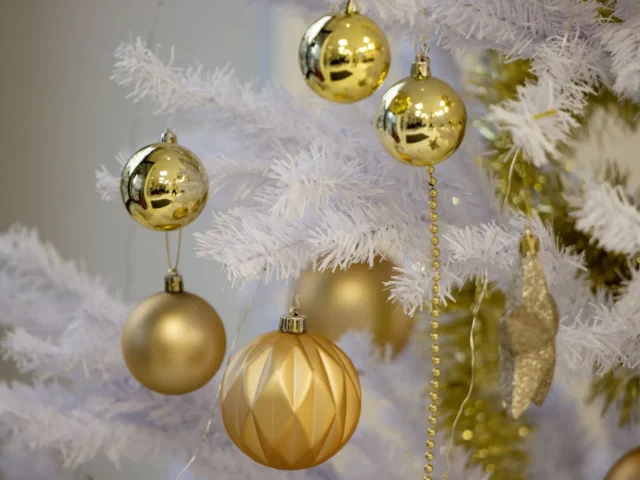
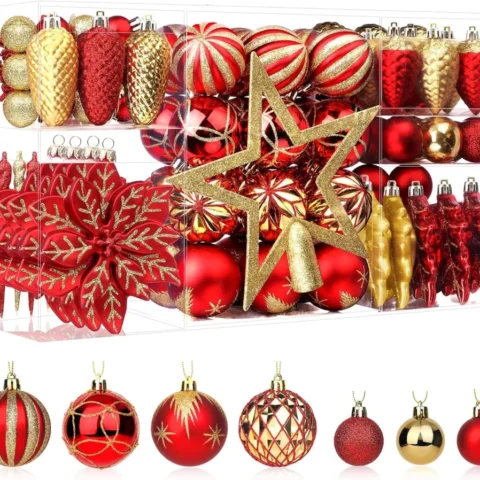
- Tinsel, invented in Nuremberg around 1610 and first made of real silver, added to make the candlelight flicker. Silver tarnished, so other metals took over, and most tinsel today is metallised PVC.
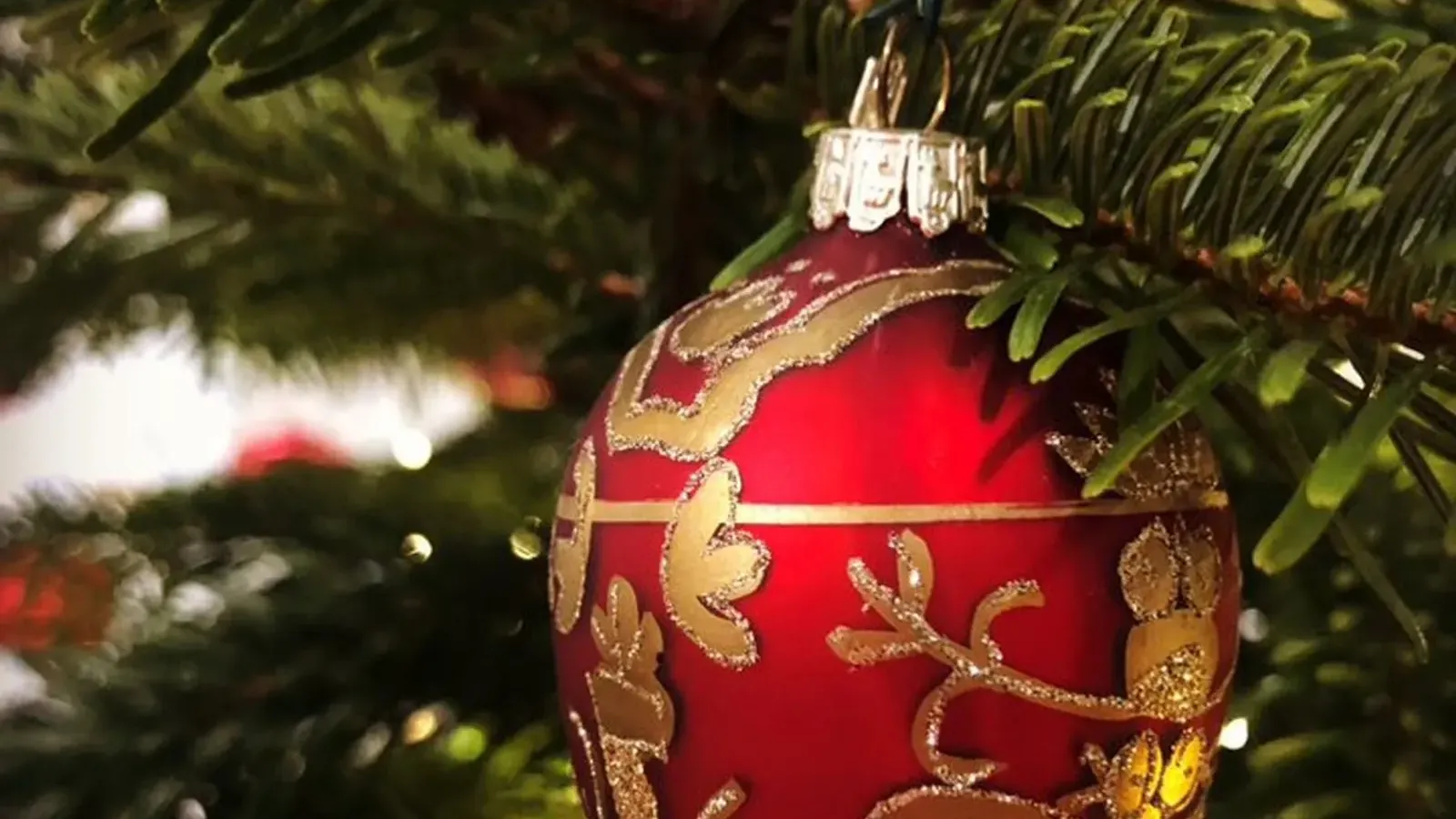
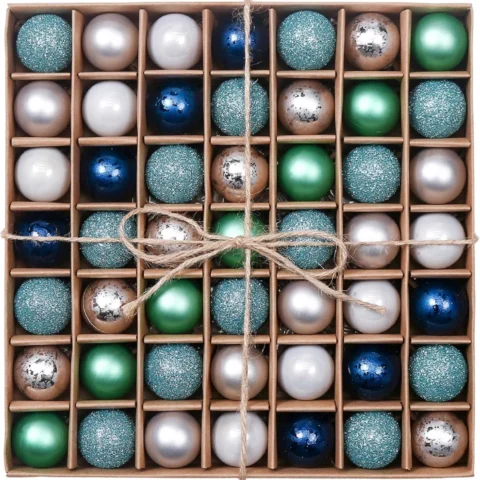
- Glass baubles, first made in Lauscha, Germany, in 1847, with figural glass ornaments following later in the century.
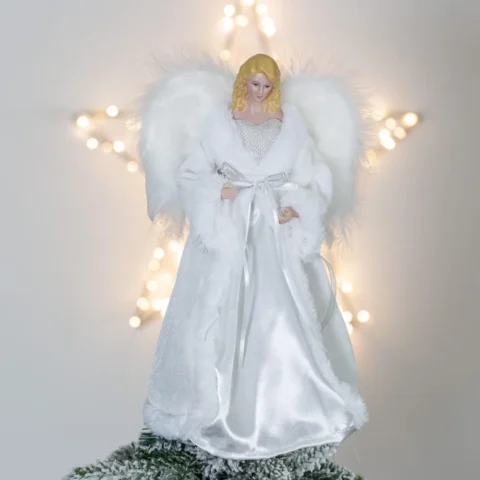
- A star or an angel on top, for the Star of Bethlehem or the angel Gabriel.
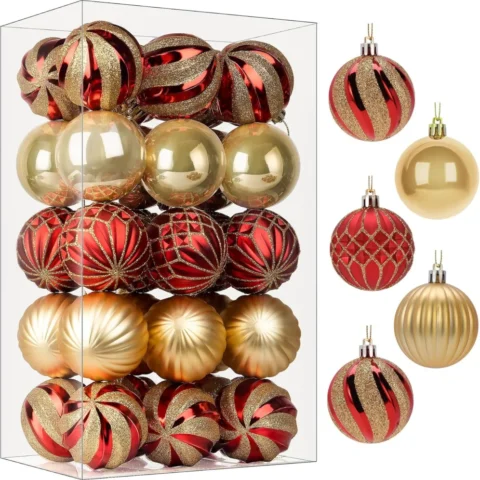
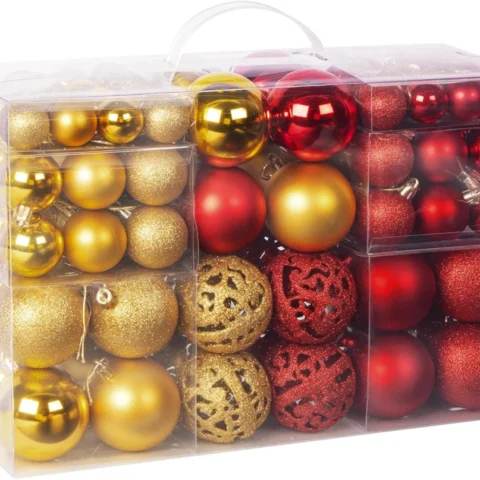
Glass is now the exception: most baubles in our Christmas baubles range are shatterproof plastic, some finished to look like glass. For the top of the tree, our Christmas tree topper ideas compare stars, angels and the alternatives.
Cards, crackers and the robin
The 1840s gave Britain two paper traditions that still sit on the mantelpiece and the dinner table.
- Christmas cards: Henry Cole, who had helped introduce the Penny Post three years earlier, commissioned the first commercial card from the artist John Callcott Horsley in 1843, and 2,050 were printed and sold that year. Early cards showed flowers and fairies more often than snow or religious scenes.
- The robin: it has appeared on Christmas cards since the mid-19th century, and in 2015 it was voted Britain’s national bird with 34% of the final vote.
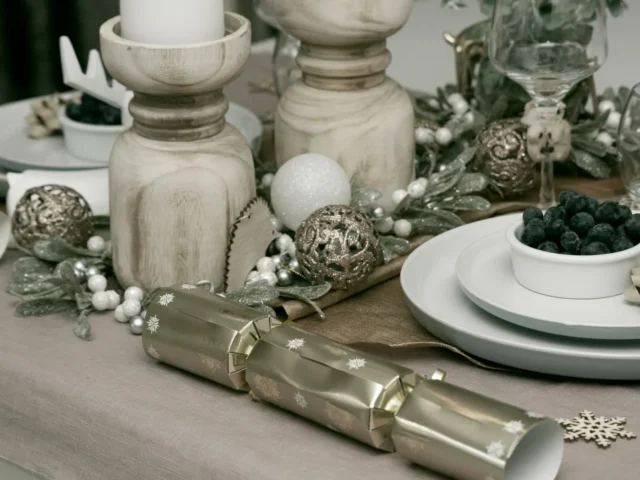
- Crackers: they date from 1847 and the London confectioner Tom Smith, who had sold sweets in twisted paper with love messages inside. The snap was inspired by the crackle of a log on the fire, the first ones were sold as Cosaques, and his son Walter added the paper hats and the gifts.
Advent wreaths, Christingles and the nativity
The Advent wreath
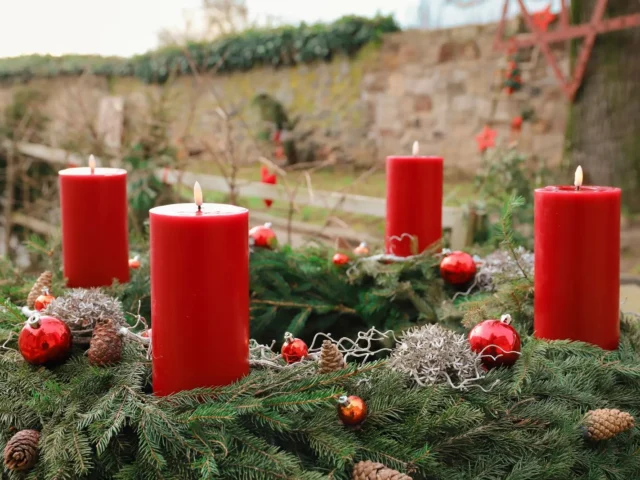
The Lutheran pastor Johann Hinrich Wichern made the first Advent wreath in Hamburg in 1839, from an old cartwheel with 24 small red candles for the weekdays and four large white ones for the Sundays. In Britain it reached television in 1964, when an Advent crown made from wire coat hangers and tinsel appeared on Blue Peter. Today’s wreath holds four candles, traditionally three purple and one pink for the third Sunday, often with a white Christ candle in the centre that is lit on Christmas Eve.
Sets of purple, pink and white candles and the rings to hold them are in our Advent candles and wreaths collection.
The Christingle
A Christingle is an orange for the world, a lit candle for Christ as the light of the world, a red ribbon for his blood, and four cocktail sticks of dried fruit or sweets for the fruits of the earth and the four seasons. It began in the Moravian Church in Germany in 1747, and John Pensom popularised it in the UK in 1968 while raising funds for The Children’s Society; in 2018 more than 6,000 Christingle services were held for the charity.
The nativity scene
St Francis of Assisi staged the first nativity scene at Christmas 1223, in a cave near Greccio in Italy. A set shows Mary, Joseph and the infant Jesus with shepherds, angels, an ox and a donkey, and the wise men traditionally join the scene on Epiphany, 6 January. YouGov found that 20% of Britons who put up decorations put one out.
Our nativity sets run from miniature figures to scenes with a stable, mostly in resin with some ceramic and wood, so check the piece count before you choose.
Stockings, the Yule log and snow globes
- Stockings: in the legend, St Nicholas threw gold for a poor man’s three daughters into their stockings, hung by the fire to dry. Stockings were hung on St Nicholas Day, and from the early 1800s on Christmas Eve too. The orange in the toe is sometimes said to stand for the gold, and coal was the threat for bad behaviour.
- Yule log: a large log burned on the hearth, a portion each evening until Twelfth Night, with a piece kept to light the next year’s log. Herrick called it the Christmas log in 1648. In France it gave way long ago to a log-shaped cake, the bûche de Noël, the chocolate log on many British tables.
- Snow globes: the first recorded ones were paperweights at the Paris Exposition of 1878, with a man holding an umbrella in a snowstorm of white powder. Erwin Perzy of Vienna patented and popularised the design, and his family firm still makes them.
Shake, musical and lantern globes are in our snow globes collection.
Traditional Christmas colours and what they mean
| Colour | Traditional meaning | Where you see it |
|---|---|---|
| Green | Eternal life, from the evergreen that keeps its leaves in winter | Holly, ivy, the tree, wreaths |
| Red | The blood of Jesus | Holly berries, the Christingle ribbon, baubles |
| Gold | Royalty and the Magi’s gift of gold; the first colour linked with Christmas | Stars, angels, tinsel |
| Purple | The church colour of Advent | Advent candles |
Which traditional decorations British homes still use
YouGov’s Christmas survey, published in November 2025, shows what Britons who put up decorations use:
| Decoration | Share of Britons who decorate |
|---|---|
| Tree lights and baubles | 83 to 84% |
| Other Christmas ornaments | 62% |
| Tinsel, a wreath and indoor lights | 49 to 51% each |
| A garland or stockings | 36 to 37% |
| Outdoor lights and candles | 30 to 31% |
| A nativity scene | 20% |
| Mistletoe | 7% |
| Fake snow | 4% |
As for the tree, 76% of them put up an artificial one and 18% a real one.
How to get a traditional Christmas look
- Keep to red, green and gold. Christmas Tree World’s traditional scheme layers red and gold baubles evenly over a realistic green tree, with gold lights, matching wreaths and garlands, and traditional bows.
- Bring in greenery: a garland of pine, holly and ivy along the mantelpiece and a wreath on the door.
- Use warm light. Victorian trees glowed with candles, and warm white LEDs or LED candles give the same tone safely.
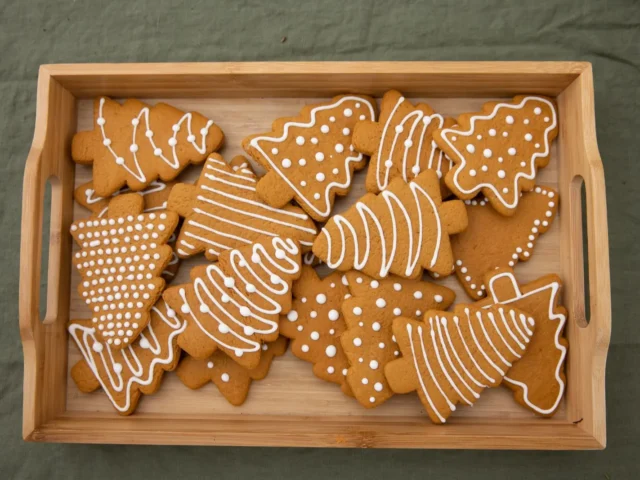
- Hang sweet and fruit shapes: gingerbread men, candy canes and dried orange slices recall the sweets and fruit of the first trees.
- Put the nativity set on the mantelpiece or a side table, with the wise men waiting until 6 January.
- Make something: paper chains, a Christingle with children or a kissing bough.
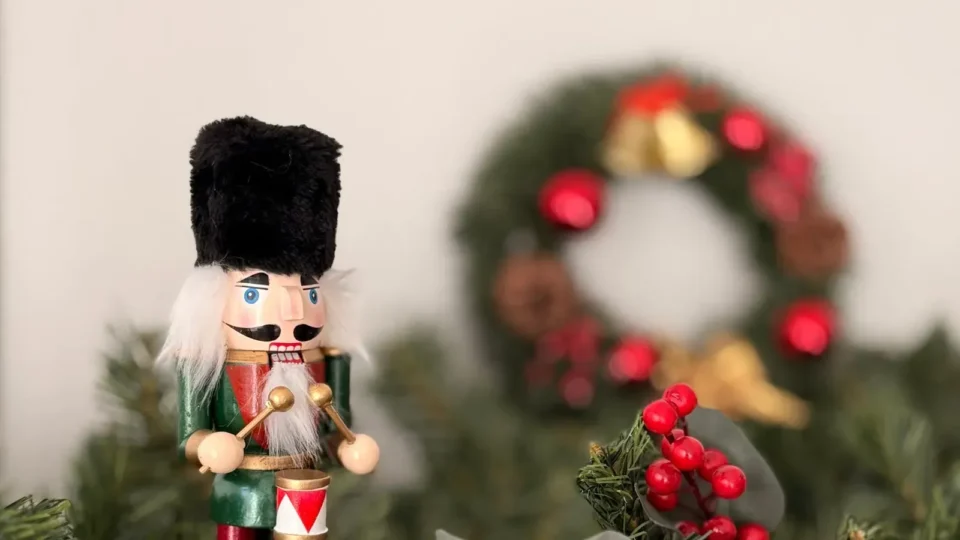
Gingerbread men, candy canes, dried orange slices and wooden nutcracker soldiers are in our tree decorations range.
The Christmas Workshop
White angel tree topper, diamante bodice, feathered wings, 30 cm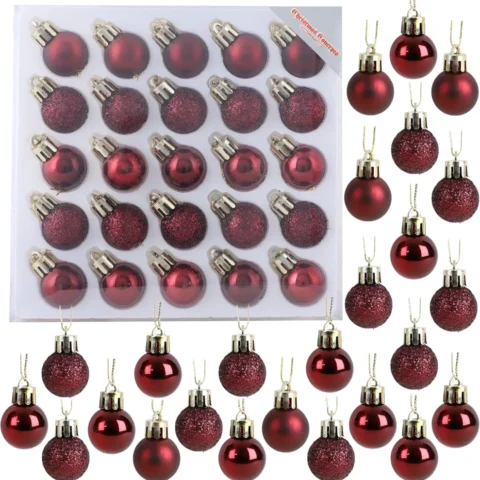
Traditional looks in 2026
Tradition is in fashion. Christmas Tree World’s trends for 2026 include the heirloom tree, built from family decorations and handmade ornaments, and a dark academia scheme in burgundy, forest green, chocolate brown and antique gold, with velvet bows and faux candles. Both suit the oldest decorations in your box, topped up with a few new Christmas tree decorations in the same colours.
Frequently asked questions
What are some traditional British Christmas decorations?
Holly, ivy and mistletoe, a Christmas tree with glass baubles, tinsel and a star or angel, crackers on the table and cards on the mantelpiece. Advent wreaths, Christingles, nativity sets, stockings by the fireplace and, in England and Lowland Scotland, the kissing bough complete the list.
What are the top 5 Christmas decorations in the UK?
In YouGov’s 2025 survey of Britons who put up decorations, tree lights and baubles came first at 83 to 84%, then other ornaments at 62%, and tinsel and a wreath at around half each. Nativity scenes (20%) and mistletoe (7%) are far less common.
What do the traditional Christmas colours mean?
Green stands for eternal life, red for the blood of Jesus and gold for royalty and the Magi’s gift. Purple is the colour of Advent, which is why most Advent candle sets are purple with one pink candle.
What did the Victorians decorate their Christmas trees with?
Candles, which in Christian symbolism stand for Christ as the light of the world, and tinsel, added to make the candlelight flicker. The earliest German trees also carried paper roses, apples, wafers and sweets, and a star or an angel went on top.
Why do we hang holly and mistletoe at Christmas?
Evergreens stood for eternal life in the middle of winter, and holly and ivy were part of London’s Christmas by 1444. Mistletoe was linked with Christmas by the 17th century, and kissing beneath it is first recorded in 1784.
What is a kissing bough?
A traditional hanging decoration from England and Lowland Scotland: a ball or crown of wire hoops covered in greenery, with apples or oranges on ribbons, candles and mistletoe tied underneath. Battery LED candles avoid a naked flame.
What is the Christmas decorating trend for 2026?
Christmas Tree World’s 2026 list includes heirloom trees built from family decorations, dark academia schemes in burgundy, forest green and antique gold, cherry cola reds, statement bows and joyful maximalism. Traditional red, green and gold decorations fit most of them.
When should traditional Christmas decorations come down?
By tradition on Twelfth Night, 5 January, or the next day, Epiphany. An older custom, recorded in Herrick’s poem, kept the greenery up until Candlemas Eve on 1 February.