Christmas table setting ideas for dinner, from simple to formal
Three ways to lay the Christmas table, from a quick family lunch to a formal dinner, with where every knife and glass goes, eight colour schemes and the tablecloth size for your table.
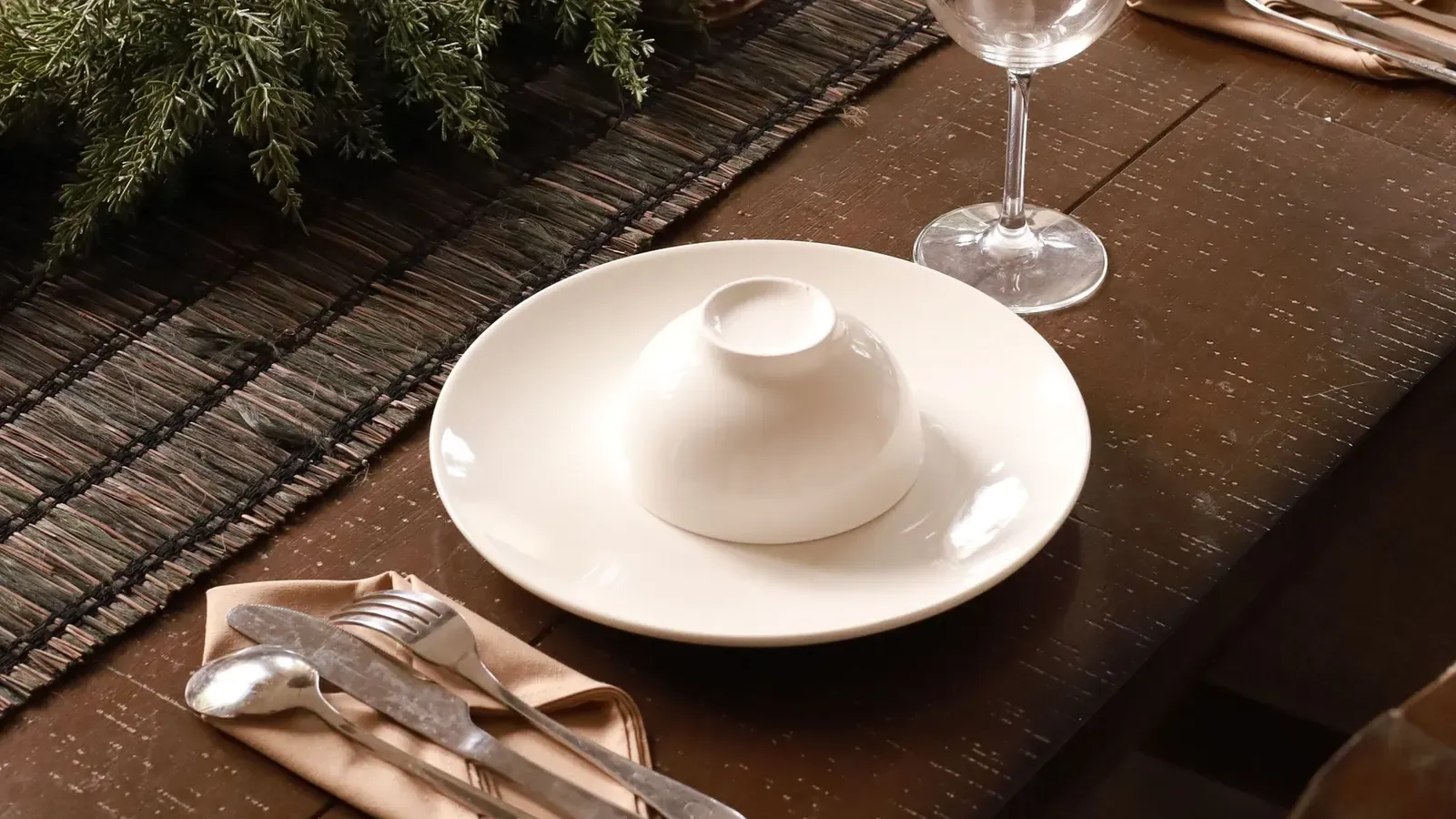
Laying the Christmas table comes down to two choices: how formal the place settings are, and how the table is dressed. This guide covers both. It starts with three levels of place setting, from a plate and a glass to a charger and a glass for each wine, with where every knife, spoon and glass goes. Then come tablecloth sizes, eight colour schemes, centrepieces, candles and a plan to have the table laid before Christmas morning.
Christmas table setting ideas: simple, informal or formal
Pick the level by the number of courses and by how the food reaches the table: passed round in dishes, or plated in the kitchen.
| Level | Suits | Each place gets | Glasses |
|---|---|---|---|
| Simple | Christmas Eve supper, Boxing Day lunch, a buffet | Dinner plate, knife, fork, napkin, cracker | One |
| Informal | Christmas dinner with a starter, main course and pudding | Side plate, a knife and fork per course, dessert spoon and fork above the plate, napkin, cracker | Two: water and wine |
| Formal | Four or more courses, food plated in the kitchen | Charger, side plate with butter knife, cutlery for every course, place card | A water glass and one for each wine served |
Forks, the side plate and the napkin go on the left; knives, spoons and glasses go on the right. That one rule settles most questions while you lay the table.
How to lay a simple Christmas table
Use this for Christmas Eve supper, Boxing Day leftovers or a buffet where guests carry their plates.
- Put a dinner plate at each place, set back slightly from the edge of the table.
- Lay the fork on the left and the knife on the right, blade facing the plate.
- Stand one glass above the tip of the knife.
- Fold the napkin onto the plate or lay it to the left of the fork.
- Put a cracker across the top of the plate.
Serving dishes go on the table at this level, so keep the middle clear and put decorations at the ends or along a narrow runner.
How to lay an informal Christmas dinner table
This layout fits the usual Christmas dinner: a starter, the main course and Christmas pudding, with the vegetables and gravy passed round in dishes.
- Put the dinner plate in the centre and a side plate to the left, for bread, the cracker and its paper hat.
- Lay the cutlery in order of use from the outside in: the starter knife and fork on the outside, the main course knife and fork next to the plate. Knife blades face the plate.
- If you serve soup, the soup spoon goes on the far right, outside the knives.
- Lay the dessert spoon and fork across the top of the plate, the fork with its handle on the left and the spoon with its handle on the right.
- Stand the water glass and the wine glass on the right, above the knives.
- Put the napkin on the side plate or to the left of the forks.
Why the cutlery goes from the outside in
Each course uses the pair furthest from the plate, so guests work inwards and never have to ask which fork comes next. Lay only what the menu needs: a spare knife and fork crowd the setting and leave guests guessing.
How to lay a formal Christmas table
A formal table keeps the same order with more pieces and two extra rules: everything lines up, and serving dishes stay off the table. Plate the food in the kitchen or carve at a side table.
- Set a charger at each place; the starter plate sits on top of it.
- Put the side plate to the left of the forks with a butter knife laid across it.
- Lay cutlery for every course from the outside in, knives on the right with blades facing the plate and forks on the left.
- Stand the water glass above the knives and the wine glasses to its right, one for each wine you will serve.
- Lay the dessert spoon and fork above the plate, the spoon above the fork. The Emily Post Institute’s guide keeps them there at the most formal settings; bringing them in with the pudding is the relaxed option.
- Fold the napkin onto the charger and put a place card above each setting.
- Line up every plate, handle and glass along the same invisible line from one end of the table to the other.
Tablecloth and runner sizes
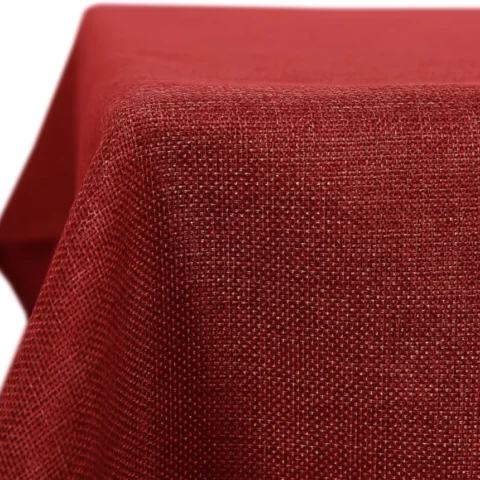
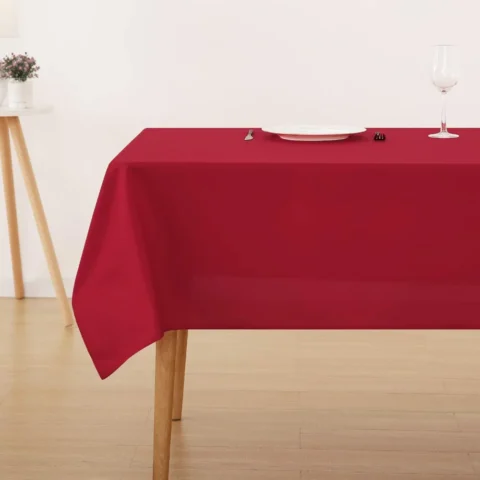
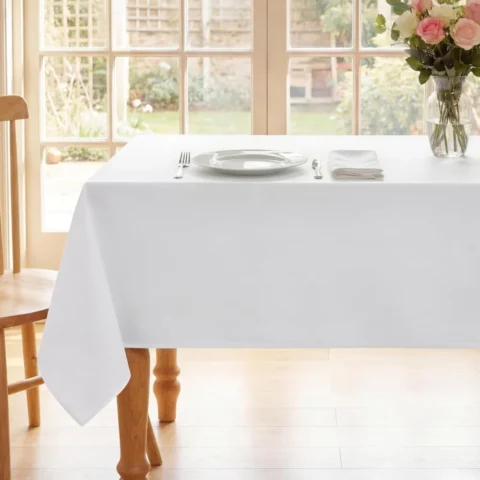
First decide the drop, how far the cloth hangs over each edge: a shorter drop for a casual meal, a longer one for a formal dinner. To find your size, add twice the drop to the length and to the width of the table top.
| Table top | Cloth with a 20 cm drop | Cloth with a 30 cm drop |
|---|---|---|
| 90 × 90 cm square | 130 × 130 cm | 150 × 150 cm |
| 140 × 80 cm | 180 × 120 cm | 200 × 140 cm |
| 160 × 90 cm | 200 × 130 cm | 220 × 150 cm |
| 200 × 100 cm | 240 × 140 cm | 260 × 160 cm |
| 120 cm round | 160 cm round | 180 cm round |
A runner hangs over the two short ends only, so it shows off a good wooden table or lays a stripe of colour along a plain cloth. White damask is the traditional cloth for a formal dinner, while checks, tartan and coloured linen look relaxed. Measure first, then browse our Christmas tablecloths and Christmas table runners.
Christmas table ideas: 8 colour schemes
Pick one scheme and repeat it at every place. Two main colours and one metal are plenty.
| Scheme | Cloth or runner | Plates and napkins | Centrepiece and extras |
|---|---|---|---|
| Red, gold and white | White or ivory cloth | White plates, ivory napkins, gold cutlery | Red candles, gold chargers, holly |
| Classic red and white | Red or white cloth | Red or white napkins, red glasses | Fresh flowers, scented candles |
| Green and white | White cloth with a foliage runner | White plates, green napkins folded into trees | Fir, eucalyptus and berries down the middle, fairy lights through the foliage |
| Rustic | Tartan cloth, wooden boards | White plates, natural linen napkins, silver cutlery | Candles in glass jars, pine cones |
| White and silver | White cloth | White plates, silver cutlery | Hurricane lanterns, bell jars, small faux fir trees, artificial snow, silver-sprayed foliage |
| Midnight blue | Deep blue or white cloth | Blue or white plates, silver cutlery, neutral napkins | Gold candles and candle holders |
| Jewel tones | Garnet, emerald, indigo or purple | Napkins in one jewel shade | Copper or rose gold accents |
| Cloud Dancer white | White linen | White plates, white or oatmeal napkins | Greenery, wood and warm white light for contrast |
The last row borrows Pantone’s colour of the year for 2026, PANTONE 11-4201 Cloud Dancer, which Pantone calls a lofty white. For the other colours and styles in the shops this year, see our Christmas decorating trends for 2026.
Centrepieces and candles
A centrepiece has one job beyond looking good: guests must still see each other. Keep it below eye level when seated, or tall and slim enough to see past, and on an informal table leave a clear strip down the middle for the dishes.
- Foliage runner: lengths of fir, eucalyptus and ivy laid end to end, with berries, baubles or a battery string of fairy lights tucked in.
- Mini trees: small potted conifers down the middle, or one at each place for guests to take home.
- Hurricane lanterns or bell jars over candles, pine cones or a little faux snow.
- A bowl of baubles and clementines for colour that costs very little.
- Flowers in a low bowl, in the colours of your scheme.
Candles on the Christmas table
London Fire Brigade’s candle advice applies at the table as much as anywhere in the house:
- Never leave candles burning unattended, and put them out when you leave the room.
- Use heat-resistant holders on a stable surface.
- Keep flames away from anything that can catch fire, which at Christmas means foliage, crackers, paper napkins and sleeves reaching across the table.
- Tea lights get very hot and can melt through plastic without a proper holder.
Where candles would sit among greenery or paper, LED and flameless candles give a warm light with no flame at all.
Place setting ideas: crackers, names and napkins
The place setting is where a Christmas table differs most from any other dinner, and the best ideas cost little.
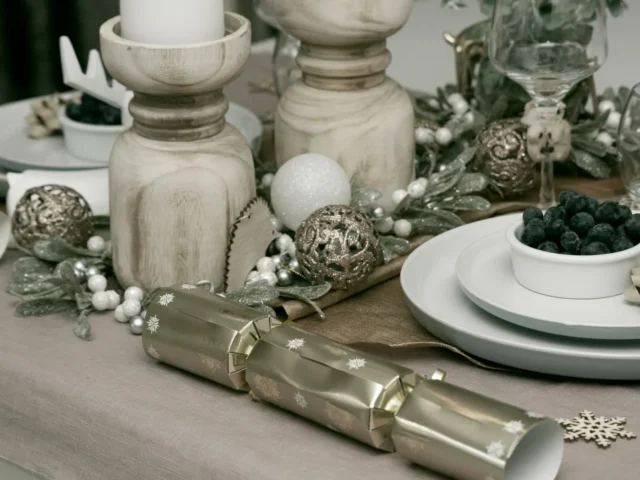
- A cracker at every place, on the side plate or across the top of the setting, ready to pull when everyone sits down.
- Name cards tucked into a sprig of rosemary or seeded eucalyptus.
- Rosemary napkin rings: bend a few fresh sprigs into a small wreath and bind them with floral wire and kitchen twine.
- An evergreen sprig tied to each napkin with ribbon.
- A folded napkin on the plate, such as a tree, a poinsettia or a candle. Our guide to folding Christmas napkins has the steps.
- A single bauble at each place with the guest’s name written on it in paint pen.
Crackers, runners and centrepieces are gathered in our Christmas table decorations collection.
When to lay the Christmas table
Laying the table a few days early takes the pressure off Christmas morning, when the oven and the hob need you more.
| When | Job |
|---|---|
| A week before | Count chairs, plates, glasses and cutlery for each course; borrow what is missing; wash and iron the cloth and napkins |
| Two or three days before | Lay the cloth and runner, then the place settings and glasses |
| Christmas Eve | Fold the napkins, set out crackers and name cards, add faux greenery and unlit candles |
| Christmas Day | Add fresh greenery and flowers, fill the water jugs, light the candles when everyone sits down |
If anything is missing on the count, from crackers to a runner, our table decorations cover the whole table.
Frequently asked questions
What are some ideas for a Christmas table setting?
Start with one colour scheme, such as red and gold, green and white or white and silver, and repeat it at every place. Give each setting a cracker, a name card and a folded napkin, and run a low centrepiece of foliage and candles down the middle. Mini trees and sprigs of rosemary or eucalyptus are cheap ways to dress each place.
What are the main types of table setting?
For a Christmas meal, three cover most needs. A simple setting has one knife, fork and glass; an informal one adds a side plate, a pair of cutlery per course and dessert cutlery above the plate; a formal one adds a charger, a water glass and a glass for each wine, with the food plated in the kitchen. A buffet only needs plates, cutlery and napkins stacked where guests help themselves.
What is the colour of the year for 2026?
Pantone’s colour of the year for 2026 is PANTONE 11-4201 Cloud Dancer, which Pantone describes as a lofty white. It is not a Christmas colour as such, but it suits an all-white table warmed up with greenery, wood and candlelight.
Where do the dessert spoon and fork go?
Across the top of the place setting, the spoon above the fork, with the fork handle on the left and the spoon handle on the right so each hand reaches its own piece. The Emily Post Institute’s guide keeps them there even at the most formal settings; at a relaxed meal you can also bring them in with the pudding.
Where do the glasses go on a table setting?
On the right, above the knives. In the Emily Post Institute’s guide the water glass sits above the knife and the wine glasses stand to its right, one for each wine served. An informal table usually needs only a water glass and one wine glass.
How far should a tablecloth hang over the table?
Choose a shorter drop for a relaxed meal and a longer one for a formal dinner. Then add twice the drop to the length and the width of the table to get the size of cloth you need: a 20 cm drop on a 160 × 90 cm table takes a 200 × 130 cm cloth.
How do you decorate a Christmas table on a budget?
Use what you already own: white plates, foliage cut from the garden, jam jars around LED tea lights and brown paper as a runner. Fold the napkins into trees or candles and put a sprig of rosemary with a handwritten name tag at each place. Keep the budget for crackers, which every guest uses.