How to make a gingerbread house (and how to stop it collapsing)
A small template in centimetres, a dough and an icing that hold their shape, the fixes for walls that slide apart, and gingerbread house ideas from a first house with children to a competition entry.
A gingerbread house stays up when the dough keeps its shape in the oven and the icing is stiff enough to work as glue. Most houses that fall down were built too fast: the roof went on before the walls had dried. This guide gives a six-piece template in centimetres, a house dough and an icing from published recipes, a day-by-day building plan, the fixes for the usual failures and gingerbread house ideas for children, adults and competitions. For a house without the baking, ready-baked panels are in our gingerbread house kits.
The plan, day by day
Spread the work over two or three days. Every stage needs chilling or drying time, and that waiting is what keeps the walls straight.
| When | Step | Time it needs |
|---|---|---|
| Day 1, morning | Make the dough, wrap it and chill it | At least 2 hours in the fridge |
| Day 1, afternoon | Roll, cut, chill again, bake, then trim the pieces while warm | 12 to 15 minutes per tray |
| Day 1, evening | Pipe the windows, door and roof tiles on the flat pieces | Up to 2 hours to dry |
| Day 2, morning | Stick the four walls together on the board and prop them | Up to 2 hours to dry |
| Day 2, afternoon | Fix the roof and pipe along the ridge | Overnight if you can |
| Day 3 | Heavy sweets, icicles, snow and the garden | Let the icing set before moving the house |
What you need: dough, icing and a template
The dough
GoodTo’s gingerbread house recipe makes one house from:
- 90g clear honey
- 175g soft dark brown sugar
- 60g butter
- 350g plain flour
- 1 tsp baking powder
- 1 tsp ground ginger and 1 tsp ground mixed spice
- 1 medium egg
Melt the honey, sugar and butter over a gentle heat until the sugar dissolves, then let it cool a little. Sift the flour, baking powder and spices into a bowl, add the honey mixture and the egg, and bring it together into a dough. The recipe’s tips insist on chilling the dough for at least 2 hours, and longer is better. It bakes at 180°C, gas 4, for 12 to 15 minutes, until slightly browned; in a fan oven, lower the heat as your oven’s manual advises.
Royal icing: the glue
Royal icing dries hard, which is why it can hold walls up; buttercream stays soft and lets them slide. GoodTo’s royal icing is 2 large egg whites beaten with 450g icing sugar for 5 to 10 minutes, until a knife drawn through it leaves a clear path. Leave out the teaspoon of glycerine in that recipe: GoodTo recommends it for coating cakes but not for piping, because the icing loses strength, and a house needs that strength.
- Raw egg white: the NHS says hen eggs with the red British Lion stamp can be eaten raw, even during pregnancy.
- No raw egg: Wilton’s gingerbread house icing uses 3 tbsp meringue powder, about 450g icing sugar and 5 tbsp warm water, beaten for 7 to 10 minutes on low speed in a heavy-duty mixer. Packets of royal icing sugar are mixed with water as the packet directs.
- Consistency: stiff enough to hold a peak for gluing, a little looser for piping lines, looser again for filling windows.
Royal icing forms a crust when it is left uncovered, so keep the bowl under a damp tea towel. Use a grease-free bowl and do not overbeat: Wilton warns that icing with too much air in it sticks less well.
A simple gingerbread house template
This small cottage has a 45° roof and six pieces. Draw them on baking parchment or thin card and cut them out.
| Piece | How many | Size | Cut-outs |
|---|---|---|---|
| Front and back | 2 | 10cm wide, 8cm high at the sides, rising to a point 13cm high in the middle | A 3 × 5cm door in the front |
| Side walls | 2 | 13 × 8cm | One 2.5cm square window each (optional) |
| Roof panels | 2 | 16 × 8.5cm | None |
| Base | 1 | 25cm square cake board | None |
The side walls sit between the front and back, so the house stands 14 × 10cm on the board and 13cm to the ridge, and the roof overhangs by 1cm at each end and about 1.5cm over the side walls. The six pieces add up to about 690cm² of dough. Lay all the templates on the rolled dough before cutting anything; if they do not fit, cut the walls first and re-roll the trimmings for the roof.
How to make a gingerbread house, step by step
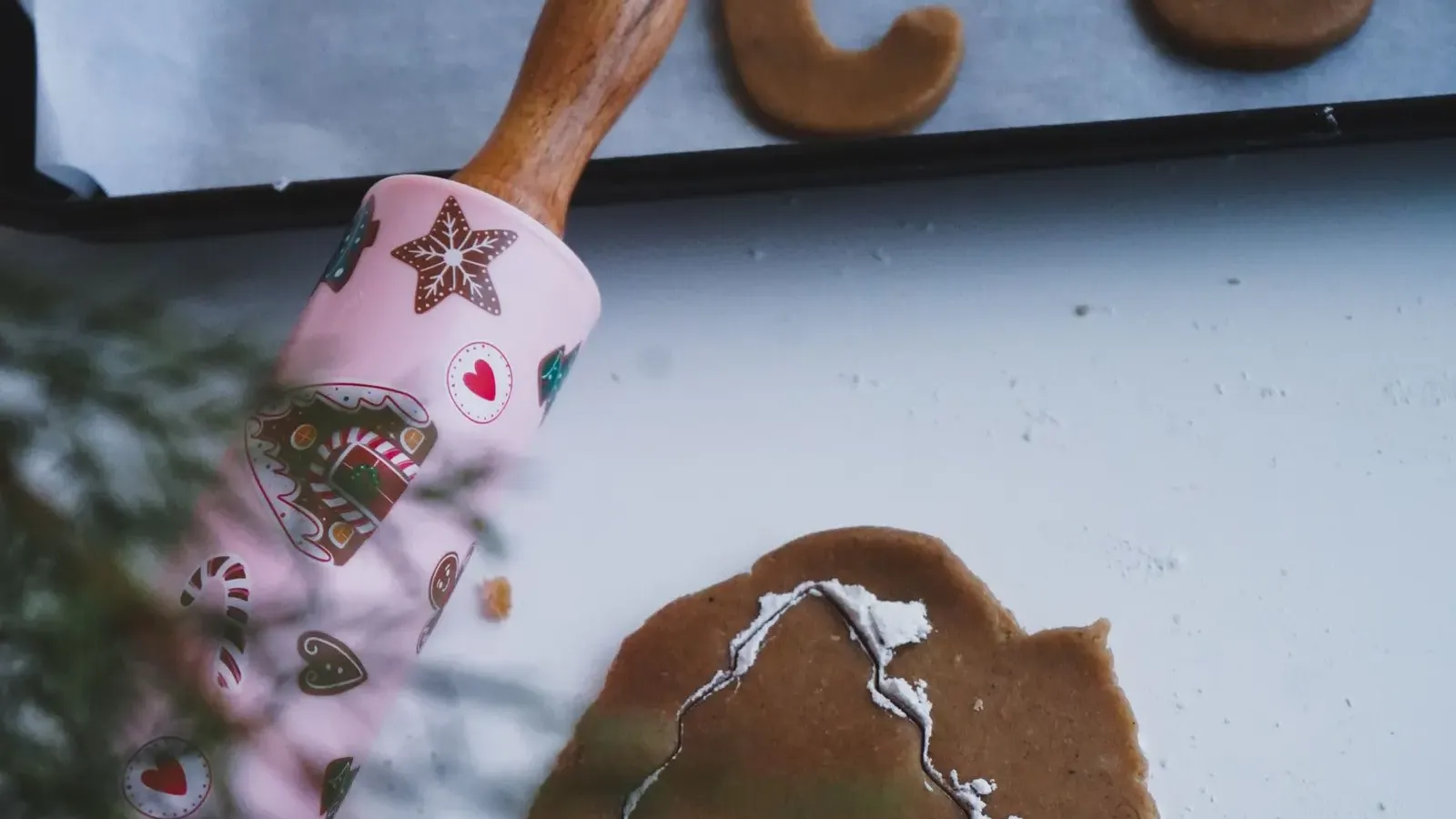
- Roll the chilled dough between two sheets of baking parchment to an even 5mm or so. Food Network’s gingerbread house is rolled to a quarter of an inch, about 6mm. One even thickness matters more than the exact figure, because thin patches brown first and snap.
- Lay the templates on the dough, cut round them with a sharp knife and cut out the door and windows. Slide the parchment onto baking trays and chill the pieces again.
- Bake for 12 to 15 minutes at 180°C, gas 4. Bake big and small pieces on separate trays, since the small ones are done first.
- As soon as the trays come out, lay each template back on its warm piece and trim the edges that spread, a trick from Food Network’s recipe. Leave the pieces to firm up on the tray before moving them to a rack.
- Decorate while the pieces are flat: pipe the window frames, the door and the roof tiles, and fix any light sweets. GoodTo’s recipe ices the walls before they go up, so no standing wall carries extra weight. Let the icing dry.
- Pipe a thick line of icing along the bottom and one side edge of the front piece, stand it on the board and press a side wall against it at a right angle. Add the other two walls the same way. Prop each wall with a tin from the cupboard, as Food Network suggests, and leave the icing to dry for up to 2 hours.
- Pipe icing along the sloping edges of the front and back and along the top of the side walls. Press on one roof panel, then the other, hold them in place for a couple of minutes and prop them. Pipe a line along the ridge to close the gap.
- Leave the house overnight, then add the heavy sweets, icicles and a garden. Sifted icing sugar makes the snow.
How to stop a gingerbread house collapsing
Each of these problems can be fixed before or during the build.
| Problem | Usual cause | Fix |
|---|---|---|
| Walls slide apart | Icing too soft, or beaten with too much air | Beat it until it holds a stiff peak and prop the walls with tins while they dry |
| Corners do not meet | Dough spread in the oven | Chill the cut pieces before baking and trim them against the template while warm |
| Wobbly joins | Uneven edges | Rub the edges level with a clean cheese grater, or a nail file for small areas, as GoodTo suggests for its gingerbread castle |
| Roof slides off | Walls still wet, or heavy sweets added too early | Let the walls dry before the roof goes on, and fix heavy sweets while the panels are flat |
| Pieces crack | Moved while hot, or rolled unevenly | Let them firm up on the tray, and roll between parchment to one thickness |
| House sags days later | Warm or steamy room | Keep it away from the kettle, the hob and radiators: Wilton notes that icing can melt in a warm or humid kitchen |
| Icing will not stick | Grease in the bowl, or a crust on the icing | Use a grease-free bowl and keep the icing covered |
For a decorating party with young children, Chinet’s party guide suggests sticking the walls together beforehand with a hot glue gun. The house then survives small hands, but the walls are no longer safe to eat, so tell the guests.
Gingerbread house ideas
The ideas below go from a first house with young children to a competition entry. Most come from the decorating guides of Wilton and the baking blog Sweetopia.
Easy gingerbread house ideas for children
- Sweet-shop roof: rows of Smarties, Dolly Mixtures or M&Ms pressed into icing, the sweets GoodTo’s recipe uses.
- Sprinkle walls: spread icing on a flat panel and shake sprinkles over it before the house is built.
- Ready-coloured icing pouches: Wilton suggests them for children and beginners, as there is no piping bag to fill.
- Ice-cream cone trees: turn cones upside down and pipe rows of green icing stars from the bottom up with a small star nozzle, as Sweetopia does.
- A snowy garden: sift icing sugar over the board and the roof.
- A decorating party: give each child a ready-built house on a plate, with sweets sorted into compartment trays and clear cups so everyone can see what there is.
Gingerbread is one of several bakes children can do most of the work on: our easy Christmas baking ideas to do with children sorts them by age, and more December activities are in our Kids & Elf collection.
Gingerbread house decorating ideas for adults
- Cereal roof tiles: rows of Shreddies look like shingles (Sweetopia). For a darker roof, toss the cereal in cocoa first, as in Food Network’s haunted gingerbread house.
- Icicles: pipe thinned icing from a fine writing nozzle along the eaves, squeezing and then pulling away to vary the length.
- Painted walls: cover the panels in white fondant and draw on them with edible pens, one of Wilton’s designs.
- Words on the walls: sketch a message with an edible pen, then pipe over it.
- A knitted house: pipe cable-knit patterns in white icing over the walls, like a Christmas jumper.
- A weathered finish: an edible colour spray over the gingerbread gives a rustic look.
- Glass windows: crushed boiled sweets in the window holes melt in the oven into coloured glass.
Gingerbread house ideas for a competition
A competition entry stands out through its subject or its shape. Read the rules before you start: they decide whether supports, boards and non-edible parts are allowed.
- A real building: your own house, the village church or a local landmark. In Bergen, Norway, a whole gingerbread town, Pepperkakebyen, has been built every year since 1991.
- A castle: GoodTo’s gingerbread castle cuts its four walls from A4 paper templates, with turrets and a drawbridge.
- Something that is not a house: Wilton’s ideas include a dog kennel, a pickup truck and a village of mini houses.
- The witch’s cottage from Hansel and Gretel. Decorated gingerbread houses began in Germany in the early 1800s, and they are linked to this Brothers Grimm tale of a house made of bread and sugar.
In the United States, the National Gingerbread House Competition at the Omni Grove Park Inn in Asheville, North Carolina, started in 1992.
Kit or from scratch?
| Kit | From scratch | |
|---|---|---|
| Baking | None, the panels come baked | Dough, at least 2 hours of chilling, baking and trimming |
| Straight edges | Cut in the factory | Depend on chilling and trimming |
| Design | Fixed shape and size | Any template you draw |
| Contents | Check the box: some include icing and sweets, some only the panels | You choose every ingredient |
| Suits | Young children, a first house, a party | Competitions, a copy of a real building |
Ready-to-build houses sold on Amazon UK are gathered in our gingerbread house kits collection.
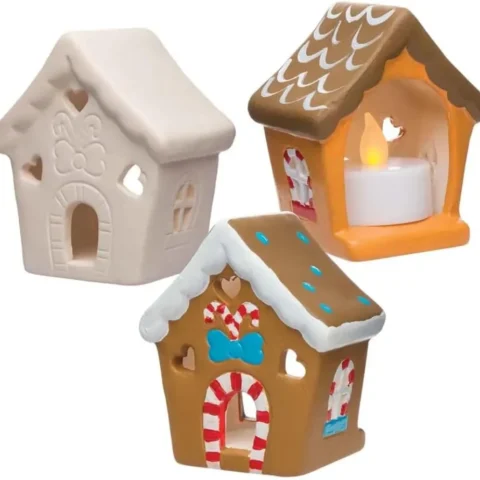
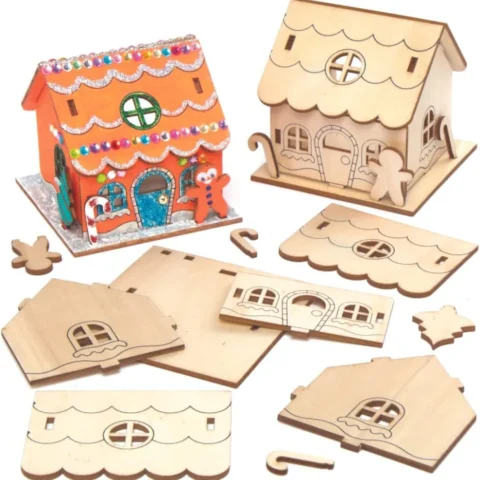
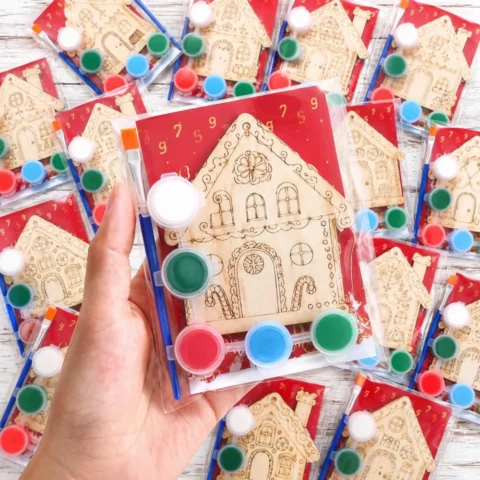
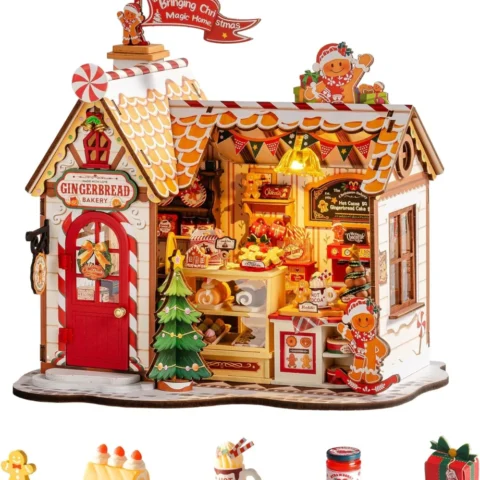
A small kit also makes a Christmas Eve activity: it fits in a Christmas Eve box next to the pyjamas, with the rest of the evening’s treats from our Kids & Elf range.
When to make it and how long it lasts
It depends on whether the house will be eaten. GoodTo says gingerbread keeps for up to a week in an airtight container, and a house on display sits in the open air, so build an edible house no more than a week before eating it. A house kept as a decoration can stand through December in a cool, dry room, away from steam and heat.
| Plan | Build it | Eat it or clear it by |
|---|---|---|
| Decoration for the season | Advent Sunday, 29 November 2026, or the weekend of 5 and 6 December | Take it down with the other decorations |
| Eaten on Christmas Day | The weekend of 19 and 20 December | Boxing Day |
| Christmas Eve activity | Bake the pieces on Wednesday 23 December, build on Thursday 24 December | 30 December |
Frequently asked questions
What are some easy gingerbread house ideas for beginners?
Start small, with a four-wall cottage or a kit with ready-baked panels. Decorate the pieces flat before building, use ready-coloured icing pouches instead of a piping bag and cover the roof with rows of Smarties or Dolly Mixtures. A dusting of icing sugar hides messy joins as snow.
How do you make a gingerbread house stay together?
Use royal icing beaten until it holds a stiff peak, trim the warm pieces so the edges are straight and prop the walls with tins while they dry. Wait until the walls are dry, which can take up to 2 hours, before the roof goes on, and leave the finished house overnight before loading it with sweets.
What is the best icing to hold a gingerbread house together?
Royal icing, made from egg white or meringue powder and icing sugar, because it dries hard. Buttercream stays soft, so walls stuck with it slowly slide. For building, leave out the glycerine some royal icing recipes add, since it weakens the set icing.
How long does a gingerbread house last?
To eat, about a week: that is how long gingerbread keeps in an airtight container, and a house on display is open to the air. As a decoration it can last the whole season in a cool, dry room, though heat and steam soften the icing.
How long before Christmas can you make a gingerbread house?
A decorative house can go up at the start of Advent, which falls on Sunday 29 November in 2026. A house you plan to eat on Christmas Day is best built the weekend before, on 19 or 20 December 2026.
Can you eat a gingerbread house?
Yes, as long as everything on it is edible and it has not stood for weeks gathering dust. Royal icing made with British Lion stamped eggs or meringue powder is safe to eat, but a house glued with a hot glue gun is not. For a kit, check the best-before date and the allergen list on the box.
What are the most common mistakes when making a gingerbread house?
Icing that is too runny and pieces that spread in the oven and were never trimmed are the usual ones. Many houses also fall because the roof went on before the walls were dry, or because heavy sweets were added to a standing house in a warm, steamy kitchen.
Which gingerbread house kit is the best?
The one that suits the builder: a small house with ready-made icing for young children, a larger or more detailed one for adults. Before buying, check whether icing and sweets are included, the finished size and the allergens.